The Tribute Journal
40 Comforting Poems for a Funeral Program
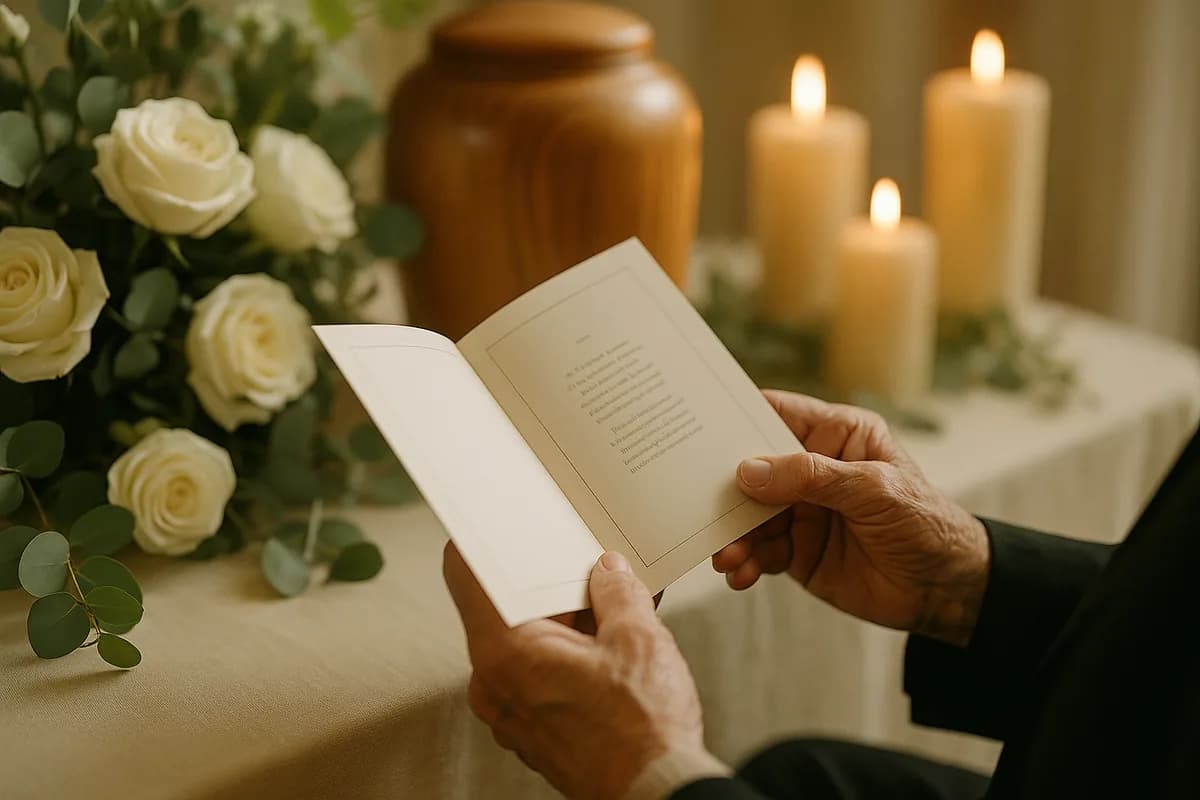
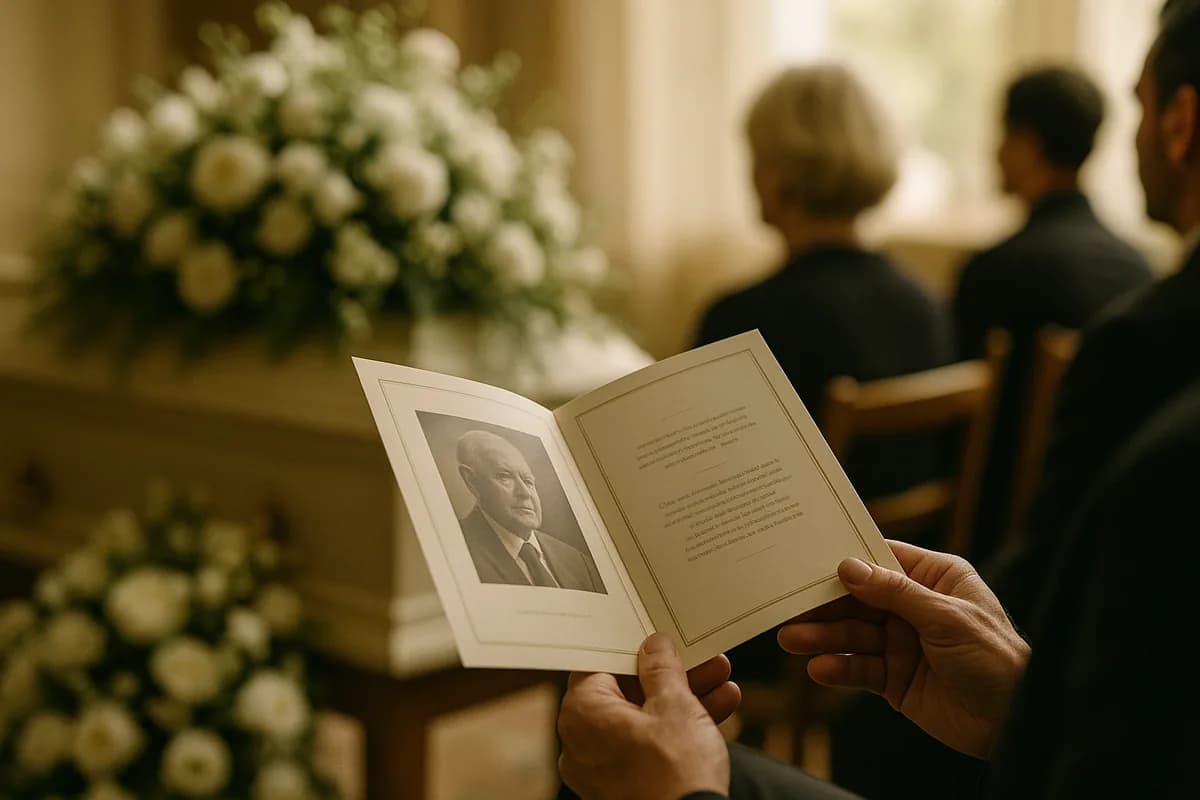
A poem can say what a grieving family cannot find words for. Printed on the back panel of a program, or read aloud at the service, the right verse gives everyone a shared moment of comfort. This collection gathers beloved poems and gentle verses suited to a funeral program, with a note on how to use each. We focus on works that are in the public domain or freely usable, and we flag well-known modern poems by title so you can seek out the proper source.
Timeless public-domain classics
These works have comforted mourners for generations and are free to print. They are gentle, universal, and rarely need explanation.
"Do Not Stand at My Grave and Weep" (traditional, attributed to Mary Elizabeth Frye)
One of the most requested funeral poems in the English-speaking world. Its opening lines — a voice assuring the living that the departed is not truly gone, but present in the wind, the snow, and the morning light — bring immediate comfort. Widely published as traditional/public domain, it reads beautifully aloud and fits any faith or none.
"Crossing the Bar" — Alfred, Lord Tennyson (1889)
Tennyson's serene meditation on death as a peaceful voyage out to sea. Its imagery of the tide and the pilot met beyond the bar makes it a favorite for those who loved the water, and for anyone seeking a hopeful, dignified close to a service.
"Remember" — Christina Rossetti (1862)
A tender sonnet that gives the living permission to be at peace: better to forget and smile, Rossetti writes, than to remember and be sad. It speaks directly to the guilt grief so often carries, and it is short enough to print in full.
"Death Is Nothing at All" — Henry Scott Holland (1910)
Drawn from a sermon by the canon of St Paul's Cathedral, this passage frames death as merely slipping into the next room. Its plain, conversational reassurance — that the bond of love is unbroken — has made it one of the most read pieces at modern funerals.
"When I Am Gone" and other short traditional verses
Countless brief anonymous verses circulate in the public domain — four- and eight-line poems that ask mourners to remember joy rather than dwell on loss. These fit perfectly on a back panel where space is tight and a full-length poem would crowd the page.
Poems of nature and peace
For a loved one who found their peace outdoors, the Romantic and Victorian poets offer many freely usable passages.
- William Wordsworth — passages from "Ode: Intimations of Immortality" speak of a light that does not truly fade.
- Emily Dickinson — short, luminous poems such as "Because I could not stop for Death" (public domain) treat death with quiet, unafraid grace.
- Robert Louis Stevenson — "Requiem," with its famous closing wish to lie "under the wide and starry sky," is brief, beautiful, and free to print.
- John Keats and Percy Bysshe Shelley — the Romantics offer many gentle stanzas on rest, memory, and the enduring spirit.
Verses of faith and hope
Hymn texts are often public domain and double as poems on the page. The words of "Amazing Grace," "Abide with Me," and "It Is Well with My Soul" carry deep comfort even when read rather than sung. For scripture-based readings grouped by theme, see our companion collection of Bible verses for a funeral program.
Modern poems families often request
Some of the most-loved funeral poems are modern and remain under copyright. We name them here rather than reprint them, so you can obtain the authorized text:
- "Funeral Blues" ("Stop all the clocks") by W. H. Auden — best known from the film Four Weddings and a Funeral.
- "Do Not Go Gentle into That Good Night" by Dylan Thomas — a fierce, defiant elegy.
- "The Dash" by Linda Ellis — on the dash between two dates and the life it represents.
- "She Is Gone" ("You can shed tears that she is gone") often attributed to David Harkins.
- "Miss Me but Let Me Go" — widely circulated, attribution varies; confirm the source before printing.
A gentle original verse you are free to use
Do not measure this life by the day it ended, / but by the mornings it made brighter, / the hands it held, the kindnesses it left / quietly behind, still warming the room.
When you have chosen a poem, our guide on what to include in a funeral program shows where it sits best on the page — and if you would like us to typeset it, you can start your program here.
How many poems should a funeral program include?
Usually one, occasionally two — a reading used in the service and a short verse on the back panel. More than that tends to crowd the design and dilute the effect of each.
Can I use a poem I found online?
Only if it is public domain or you have permission. Poems posted online are frequently still under copyright even when no author is shown. When unsure, choose a classic public-domain work.