The Tribute Journal
How to Make a Funeral Program: A Step-by-Step Guide
Making a funeral program is one of those tasks that arrives at the hardest possible time. You are grieving, the calendar is short, and suddenly you are asked to produce a keepsake that honors an entire life on a single folded page. It can feel like too much. The good news is that a funeral program follows a gentle, predictable shape — and once you understand that shape, the rest is simply filling it in with love.
This guide walks through the whole process from start to finish: what a program is, what to gather before you begin, how to lay out the order of service, and how to design and print it so it looks dignified in a mourner's hands. Take it one step at a time. You do not have to do all of it today.
What a funeral program actually is
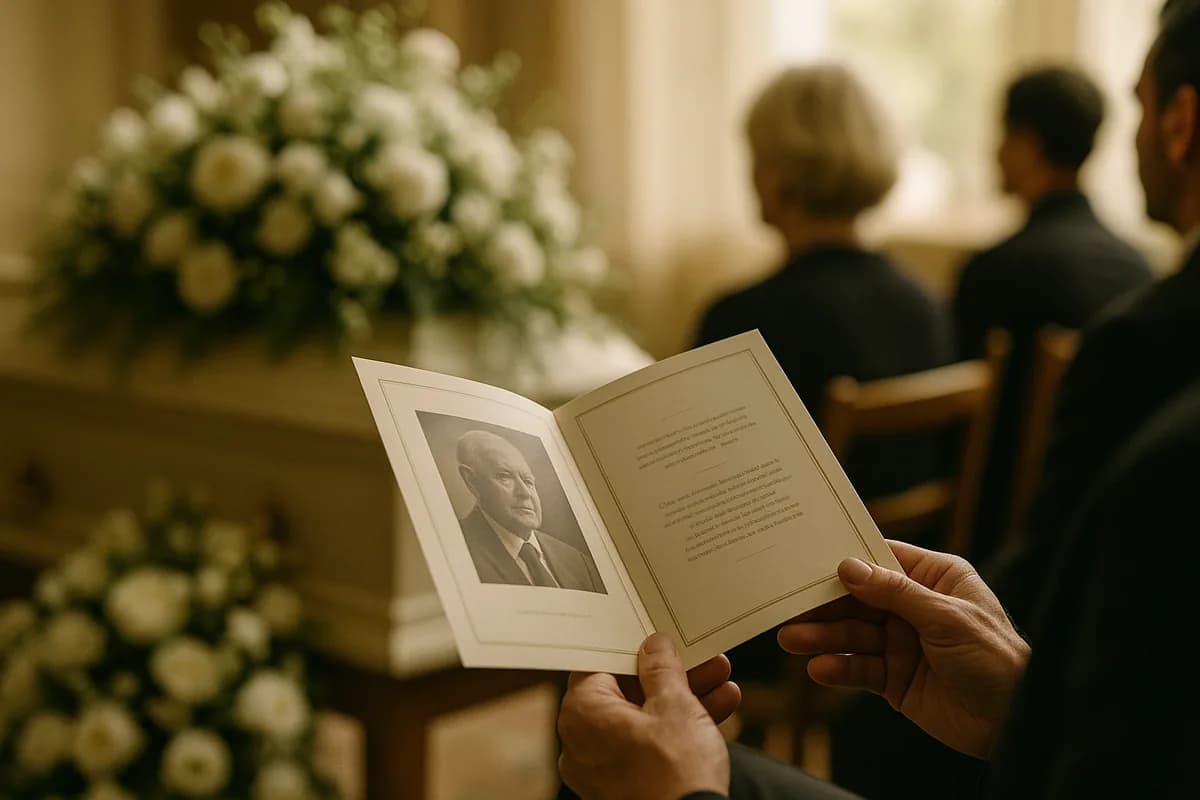
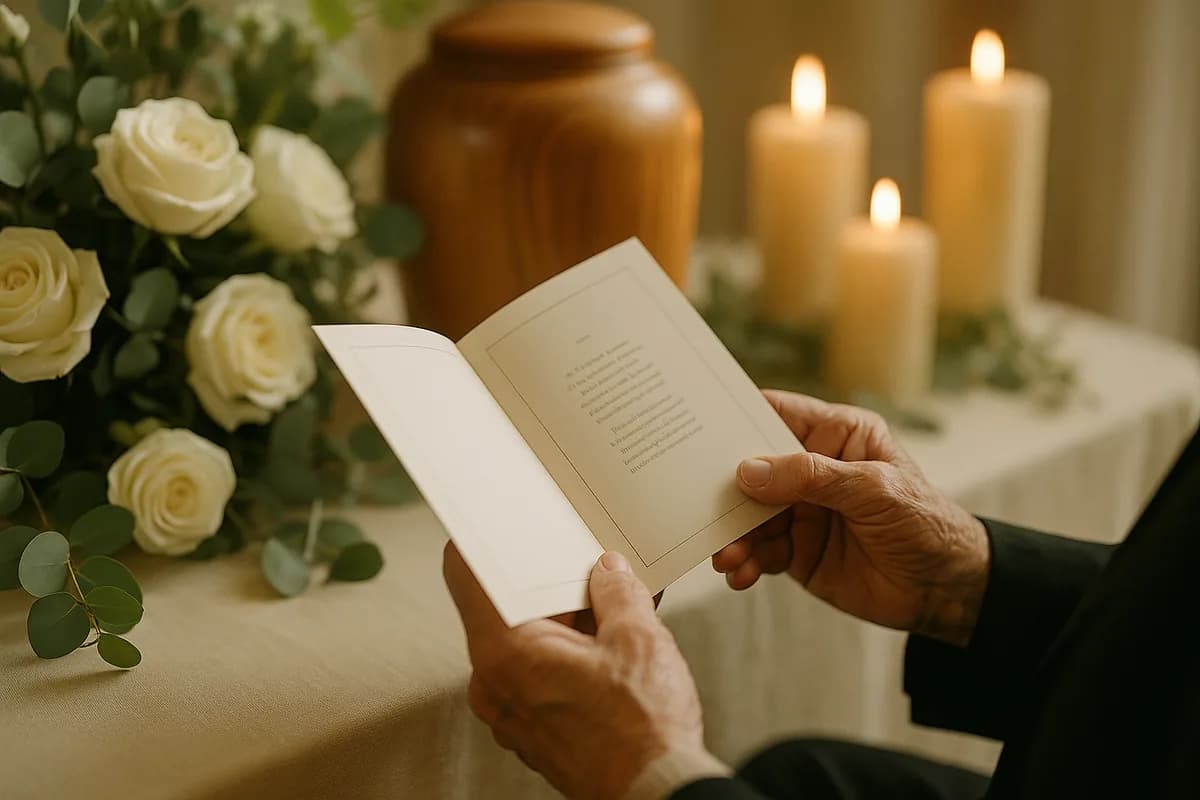
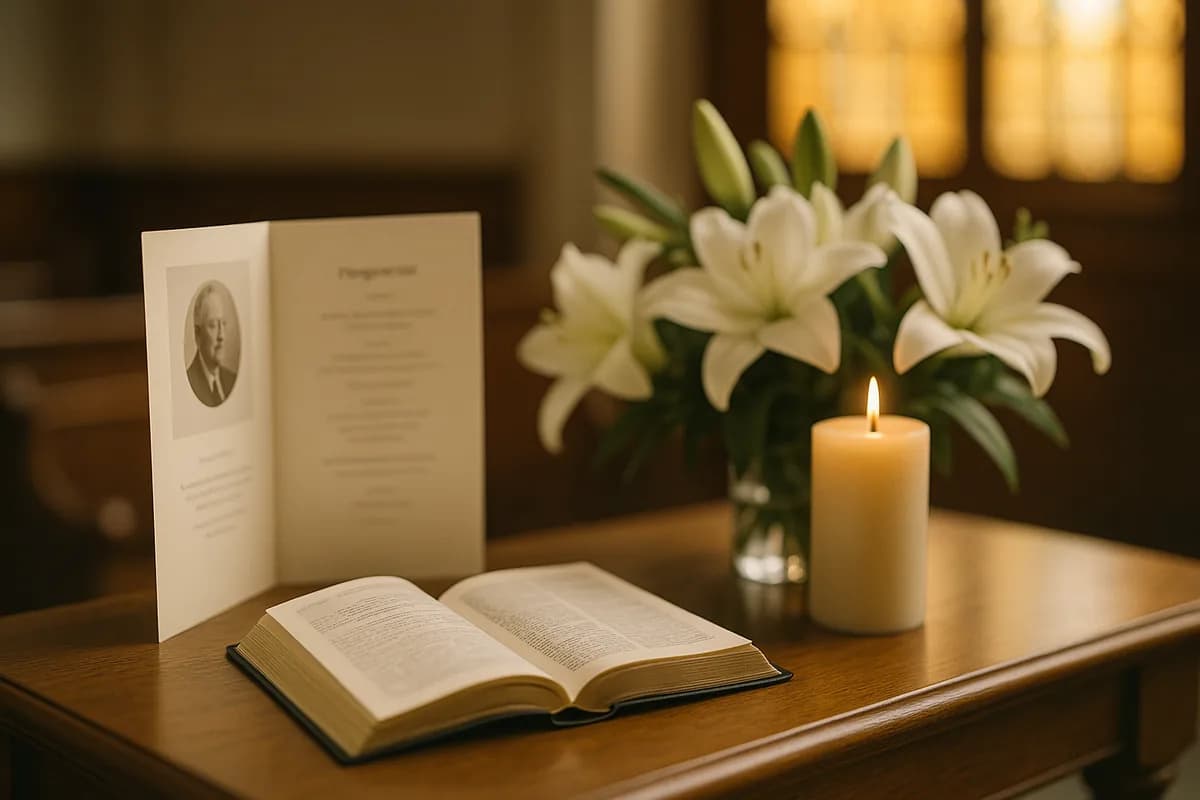
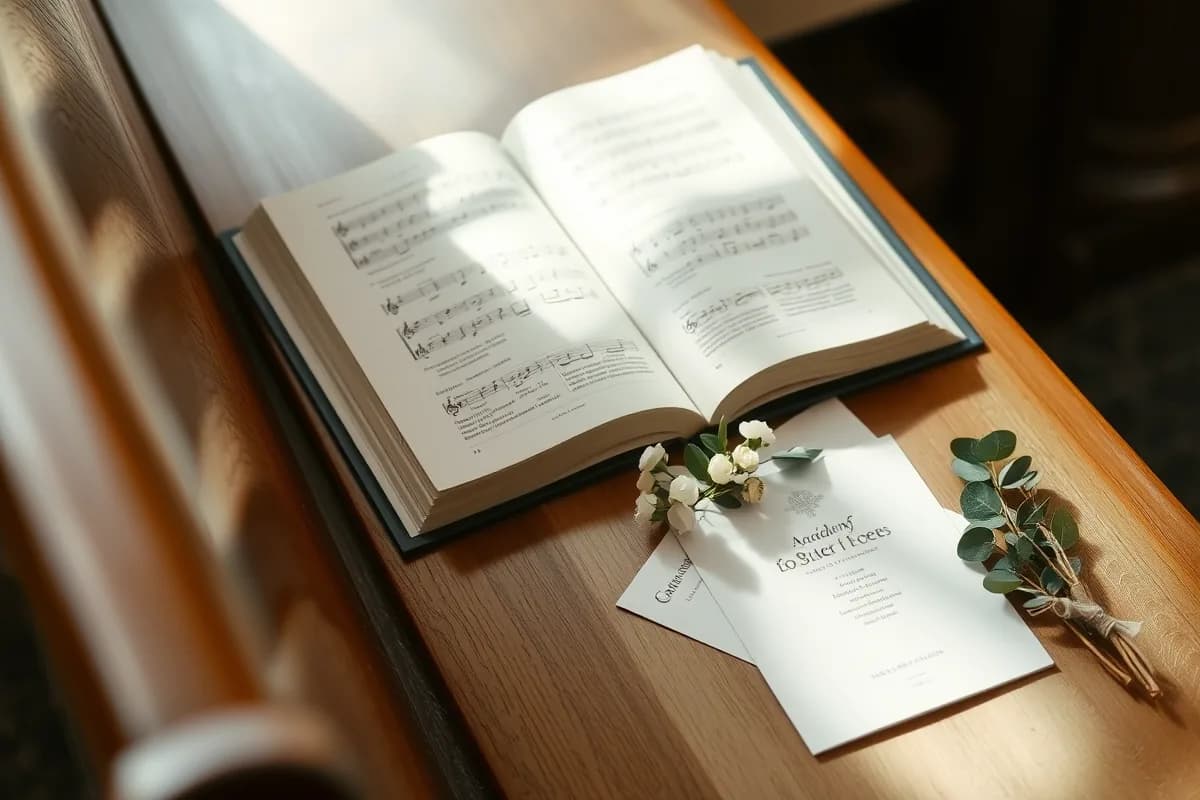
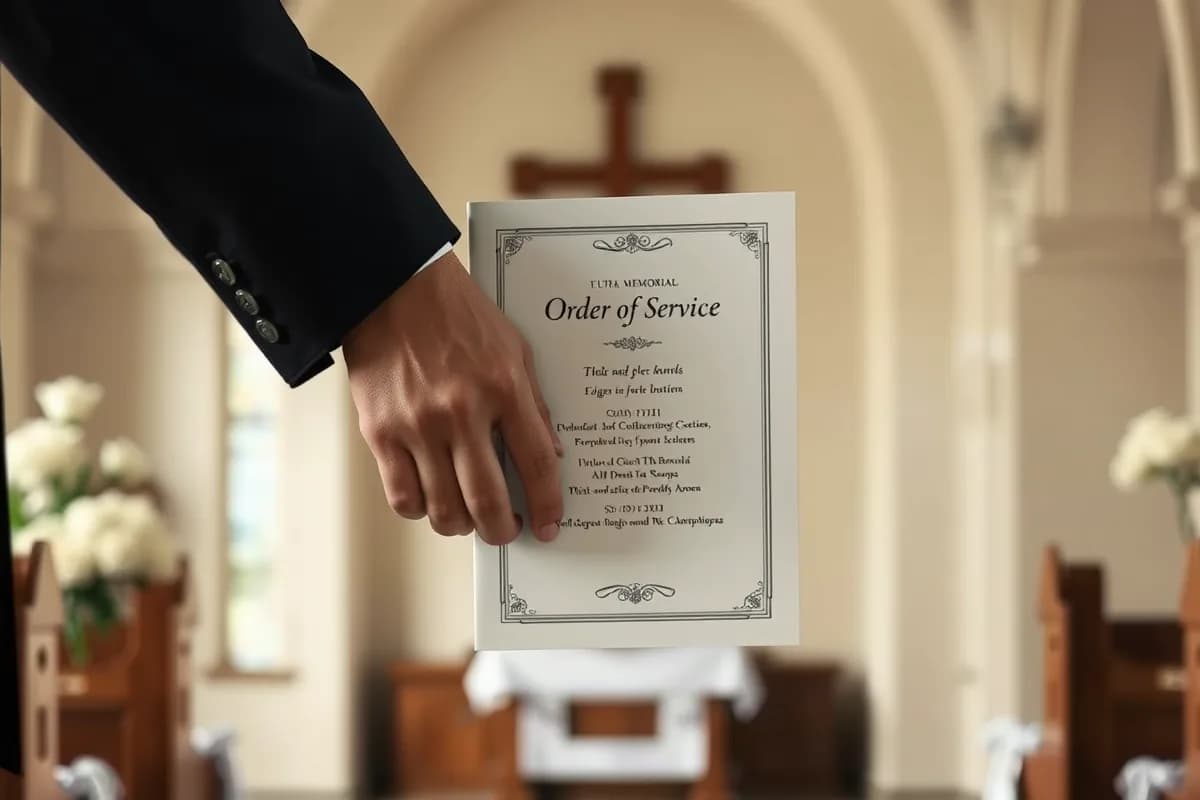
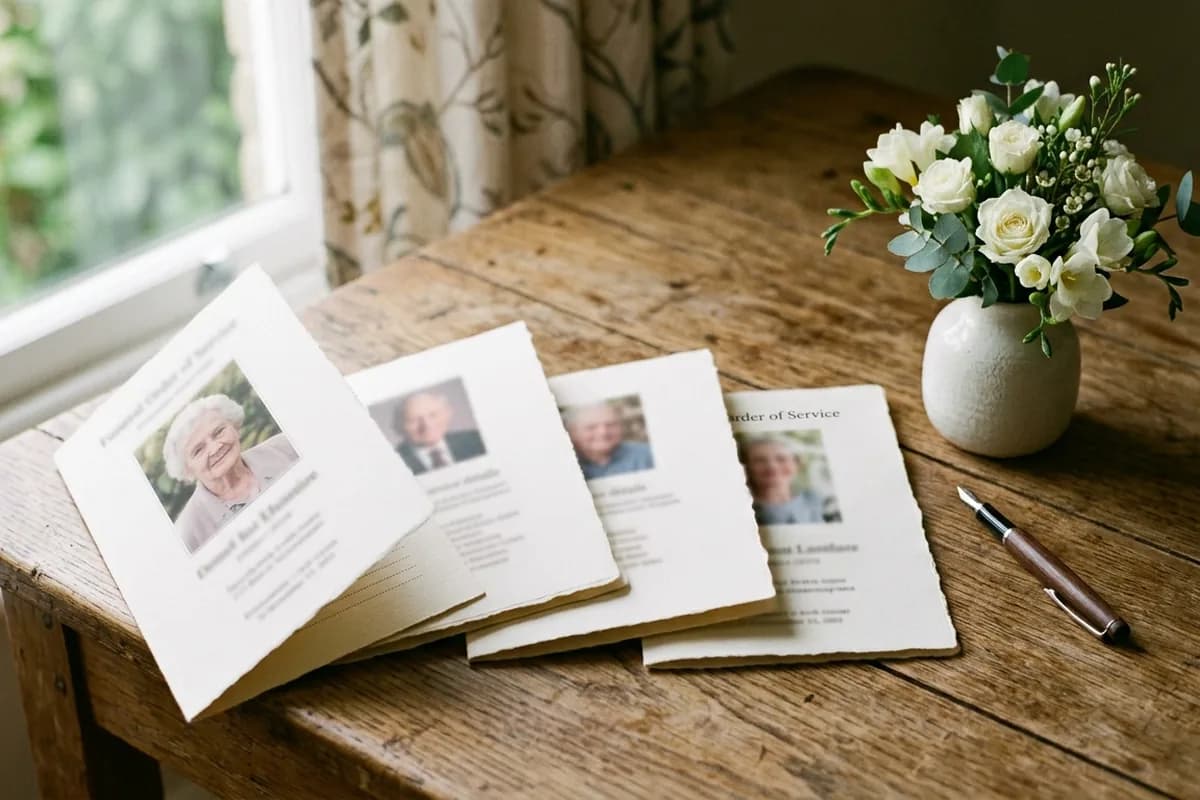
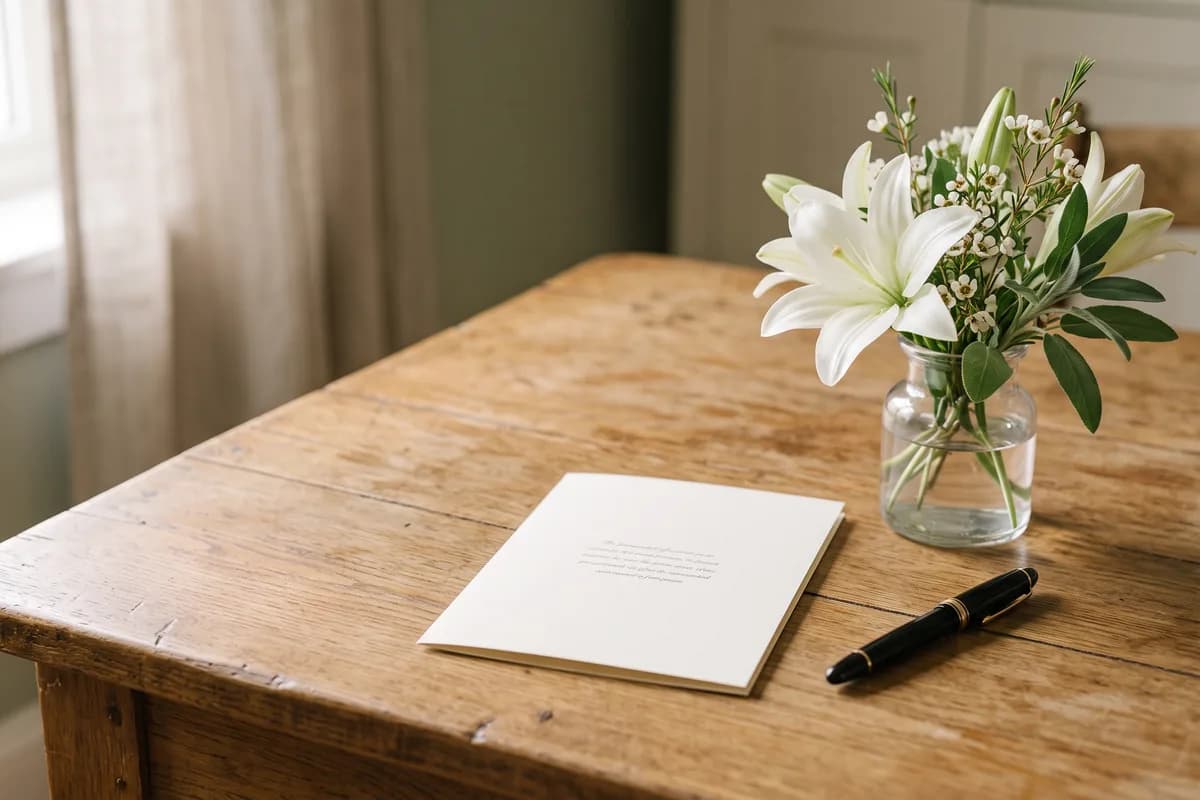
A funeral program — sometimes called an order of service, a memorial folder, or a funeral bulletin — is the printed handout given to guests as they arrive at a service. It does two quiet jobs at once. First, it guides people through the ceremony: what is happening, in what order, and when to stand, sing, or pray. Second, it is a keepsake — a small, beautiful record of a life that family and friends will keep in a drawer or a Bible for years.
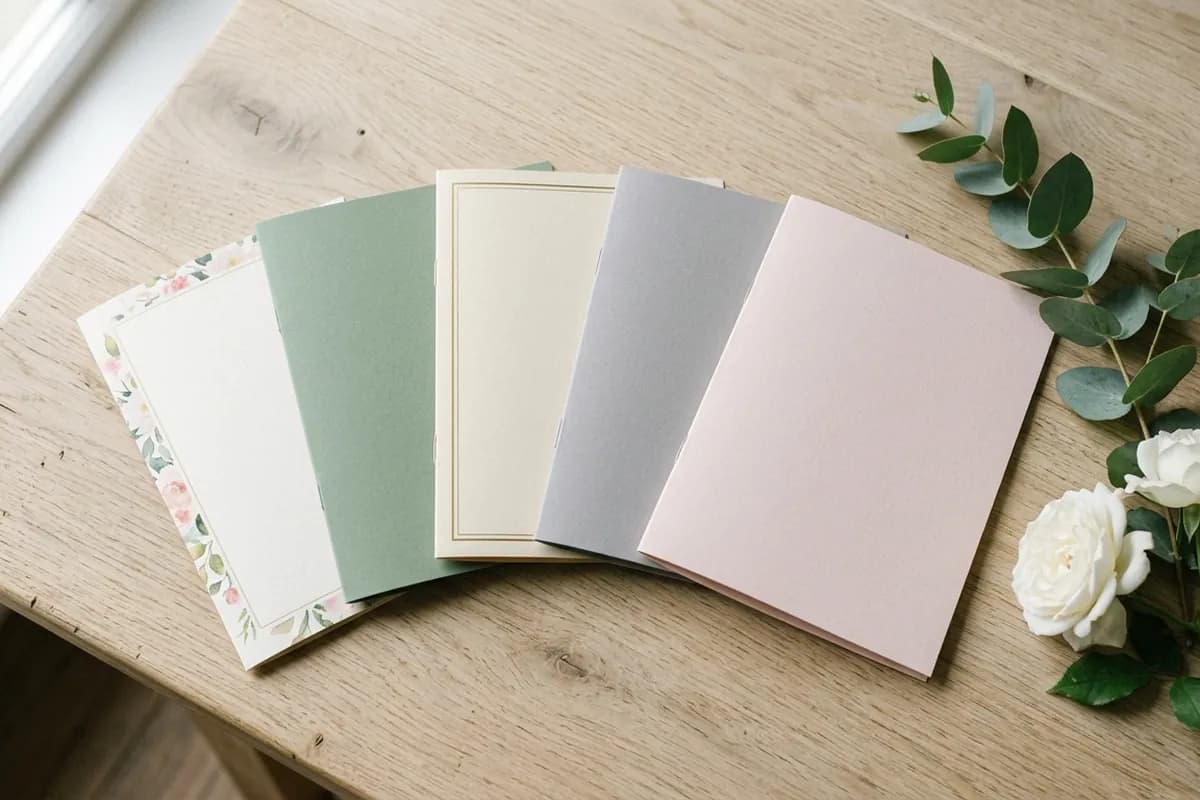
Most programs are a single sheet of letter-size paper (8.5 × 11 inches) folded once to make four panels. Longer booklets are common for larger services or when there are many photographs and readings to include. There is no single correct format — the right one is the one that fits the life you are honoring.
Step 1: Gather the essentials
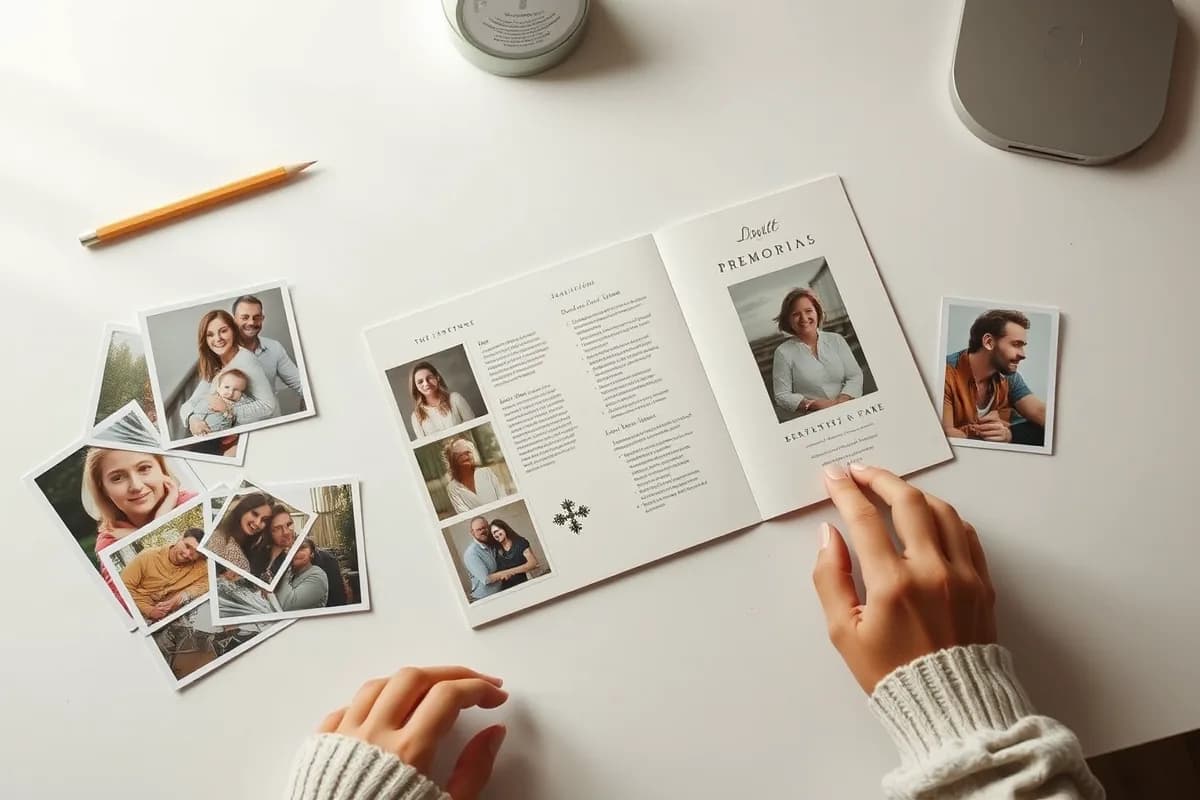
Before you open any design tool, collect the raw material. Having everything in one place first makes the rest of the process calm rather than frantic. You will want:
- The full name of your loved one, including a maiden name or nickname if it belongs on the cover.
- Dates of birth and passing, and the town they were from if you wish to include it.
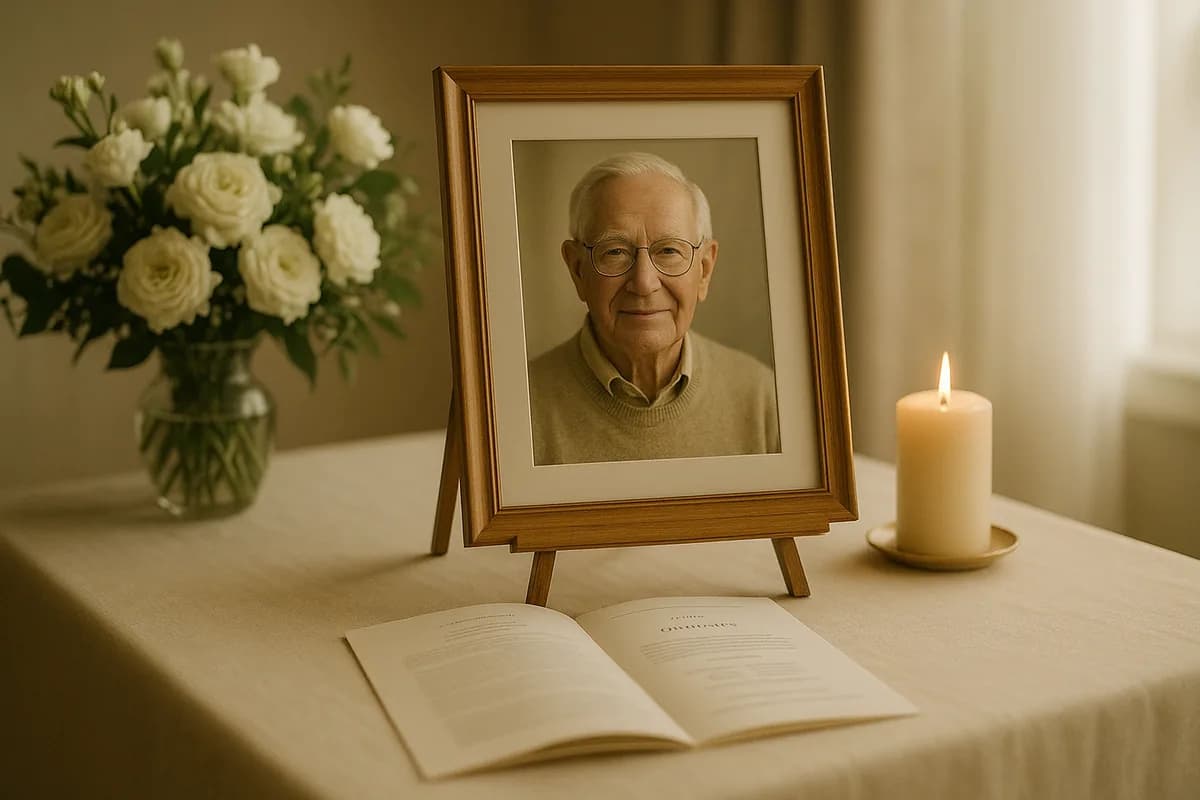
- A favorite photograph for the cover — ideally a clear, well-lit image that captures their spirit.
- The service details: date, time, venue, and the name of the officiant or celebrant.
- The order of service — the sequence of hymns, readings, prayers, and eulogies.
- The obituary or life story, and any poems, scripture, or lyrics to be printed.
- The names of pallbearers, and any acknowledgements the family wishes to make.
- Details of a reception or repast afterward, and any memorial-donation request in lieu of flowers.
For a full breakdown of every section a program can hold — and which ones you can safely leave out — see our companion guide on what to include in a funeral program.
Step 2: Choose a format and size
The format decides how much room you have. Three shapes cover almost every service:
- Single-fold (bi-fold): one letter sheet folded once, giving four panels. This is the classic funeral program — front cover, order of service inside, obituary or poem, and a back panel for acknowledgements. It suits most services beautifully.
- Booklet: several sheets folded and nested, giving eight, twelve, or more pages. Choose this when you have many photographs, a long life story, or several readings and want room to breathe.
- Single card or flat sheet: a one- or two-sided card for a short, simple graveside service or a celebration of life where the order is brief.
If you are unsure, the single-fold is almost always the safe and elegant choice. It holds everything a typical service needs without feeling crowded, and it prints on any home or office printer.
Step 3: Build the order of service
The order of service is the heart of the program — the minute-by-minute flow of the ceremony. It is usually printed on the inside panels as a simple list, with each element on its own line and, where helpful, the name of the person leading it or the title of the hymn.
A traditional service often follows a shape like this: a musical prelude, the opening words from the officiant, an opening hymn, a scripture reading, a prayer, the eulogy or tribute, a second reading or poem, a reflection or musical piece, closing words, the committal, and a final hymn or recessional. A celebration of life is often looser — music, an open invitation to share memories, a slideshow, a favorite song — and that is entirely right for the person it honors.
Because the exact sequence varies so much by faith and family, we have gathered several ready-to-adapt templates — traditional Christian, Catholic, celebration of life, and non-religious — in our guide to funeral order of service examples. If the service is a Catholic Funeral Mass, its structure is fixed and specific; our Catholic funeral program guide walks through each part.
Step 4: Add the personal touches
This is where a program stops being a schedule and becomes a tribute. A well-chosen poem, a passage of scripture, or a few lines of a hymn can say what a bare list cannot. So can the obituary — the short life story that lets a room full of people, some of whom never met, understand who this person was.
If writing feels impossible right now, you are not alone, and there is help. Our guide on how to write an obituary gives you a structure and a full worked example to follow. For readings, browse our collection of comforting funeral poems and Bible verses for a funeral program, grouped by theme so you can find the right tone quickly. And if someone will be speaking, our gentle guide to writing a eulogy can steady their hand.
The program is often the only thing a mourner takes home. Let it hold something worth keeping — a photograph, a verse, a single true sentence about who they were.
Step 5: Design, proof, and print
Now the pieces come together on the page. Whether you use a template, a design tool, or a done-for-you service, a few principles keep a program looking dignified rather than cluttered:
- Choose one or two typefaces at most — a graceful serif for headings and a clean, readable face for body text.
- Give the text room. Generous margins and space between lines read as calm and respectful; crowding reads as rushed.
- Use a high-resolution cover photo. A blurry or pixelated image is the most common way a heartfelt program looks less than it should.
- Keep the palette soft and consistent, drawn from the cover image or the person's favorite colors.
- Proofread every name, date, and place — twice, and ideally with a second person. Errors in a keepsake are painful to catch after printing.
When the layout is right, export a print-ready PDF and print a single test copy before running the full batch. Programs print well at home on a decent color printer, but for a polished finish many families use a local print shop, an office-supply store's print counter, or their funeral home. Ask for a slightly heavier paper — text weight or light card — so the folded program feels substantial.
A short, honest word on doing this well
There is no perfect funeral program, and chasing one will only add weight to an already heavy week. What families remember is not the flawless kerning; it is the photograph on the cover, the poem their mother loved, the feeling that someone took care. Do the steps above at whatever pace you can, ask for help where you need it, and trust that a program made with love is already enough.
How long should a funeral program be?
Most are a single folded sheet (four panels). Use a booklet only when you have many photos, readings, or a long life story. Longer is not better — clear and calm is.
Do I have to include the obituary?
No. Many programs print only a short life summary, or none at all, and save the full obituary for the newspaper or funeral-home website. Include what feels right and fits the space.
How many copies should I print?
A common rule is one program per one to two guests, plus a few dozen extra for family keepsakes and anyone who arrives unexpectedly. It is far better to have too many than too few.
Can I make a funeral program the day of the service?
Yes. With the details and a photo in hand, a program can be designed, proofed, and printed the same day. If you are short on time, a done-for-you service can deliver a print-ready file within hours.