The Tribute Journal
Funeral Repast: What It Is and How to Plan One
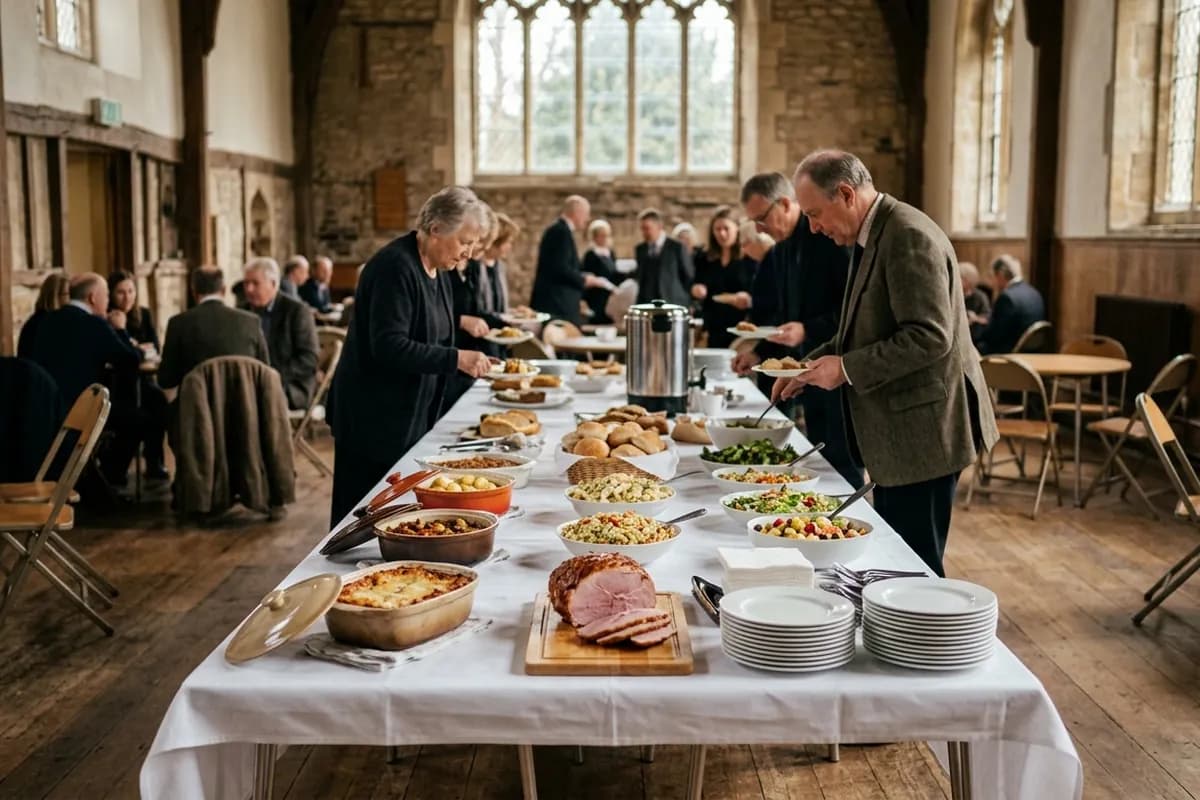
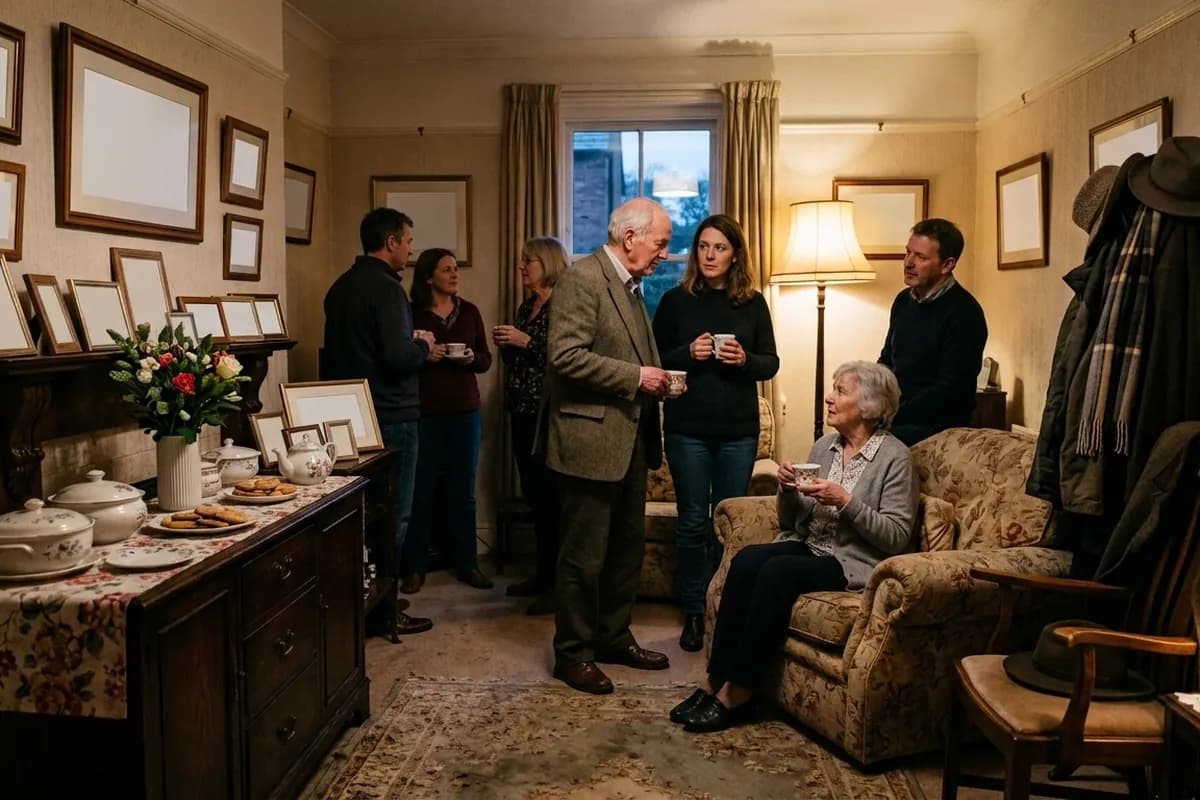
A funeral repast is the meal held after the burial or service, where family and friends gather to eat, talk and begin the slow return to ordinary life. It is the last part of the day, it is deliberately informal, and for many families it is the part they remember most warmly.
If you have been asked to organize one and have no idea what that involves, the short answer is: a room, food people can serve themselves, and somewhere to sit. Everything below is detail on top of that.
Repast or repass?
"Repast" is the standard spelling; "repass" is a very common variant, especially in African-American church communities in the United States, where the repast is a long-established and central tradition.
Neither is wrong in practice. "Repast" comes from the Old French *repast*, simply meaning a meal. "Repass" is how a great many people say and write it, and if that is the word your family uses, use it. Nobody at the meal will be checking a dictionary.
You will also hear the same gathering called a funeral reception, a mercy meal (common in Catholic parishes), a funeral tea in Britain and Ireland, or simply *the food afterward*.
Repast vs wake: which comes when
- Wake — happens *before* the funeral, usually the evening prior. The body is often present. The mood is quieter and more formal
- Funeral or memorial service — the service itself
- Repast — happens *after* the burial or service, on the same day. No body present. The mood is noticeably lighter
That order matters because people frequently confuse the two gatherings. Our guide to what a wake is covers the one that comes first, including what to wear and how long to stay.
Where to hold it
- The church hall or fellowship hall — the most common choice when the service is at a church. Often free or a small donation, and many congregations have a bereavement committee that will cook and serve
- The family home — warmest option, but someone has to host, clean and be hospitable on the hardest day of their year. Only choose this if a relative genuinely volunteers
- A restaurant with a private room — no cooking, no cleanup, a clear end time. Call ahead and say it is a funeral; most will be accommodating about timing and a flexible headcount
- The funeral home's reception room — convenient, sometimes included, usually the least personal. If they charge for it, that fee must appear as its own line on the itemized price list they are required to give you (FTC Funeral Rule)
- A community center, club or pub — good for large numbers when no church hall is available
What food to serve
The governing principle: food that holds at room temperature, serves itself, and does not require anyone to carve, plate or supervise it.
- Casseroles and baked pasta — the classic, because they travel, reheat and stretch
- A ham or roast turkey, already sliced, with rolls
- Cold salads — potato, macaroni, green, coleslaw
- Sandwich trays and cheese boards for a lighter repast
- Fried chicken — a fixture of the traditional repass
- Coffee, tea, iced tea and water. Alcohol is a family-by-family decision and often absent
- Cake, cookies and pies — someone always brings more dessert than anyone expected
Quantity rule of thumb: plan for about two-thirds of the people who attended the service. Not everyone comes on to the repast, and those who do rarely eat a full meal.
Who pays for it
Usually the immediate family, but it is far more often shared than people expect. Congregations frequently cover or cook the meal as a ministry. Extended family commonly contributes dishes or splits a restaurant bill. In some traditions, the community simply arrives with food and the question never arises.
For scale: the funeral-home costs that the National Funeral Directors Association reports in its median figures cover the service and merchandise, not the meal afterward — the repast is almost always a separate and far smaller expense. If money is tight, say so to whoever is helping you. A church hall with a potluck repast costs almost nothing and is entirely traditional. The repast is one of the few parts of a funeral where spending less is not a compromise — it is the older form of the thing. Our funeral planning checklist covers what else can be trimmed without anyone noticing.
How long it lasts and what happens
- Guests arrive from the cemetery, usually within half an hour of the committal — though with cremation now the more common choice in the US, whose national rate the Cremation Association of North America tracks, many repasts now follow a memorial service instead, with no committal to travel from
- People queue for food and find seats — this takes longer than you think and is the real start of it
- Conversation. Not about the death, mostly; about the person, and about everything else
- Sometimes short informal remarks, or a blessing before the meal
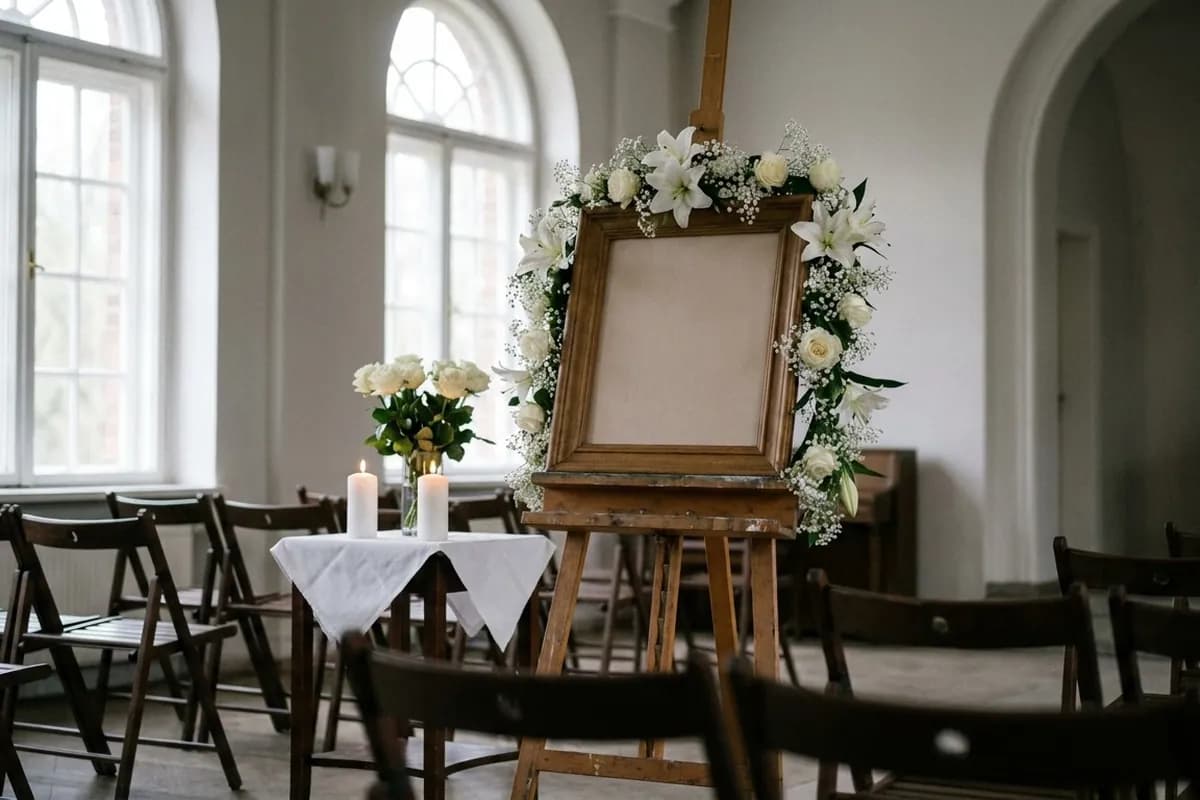
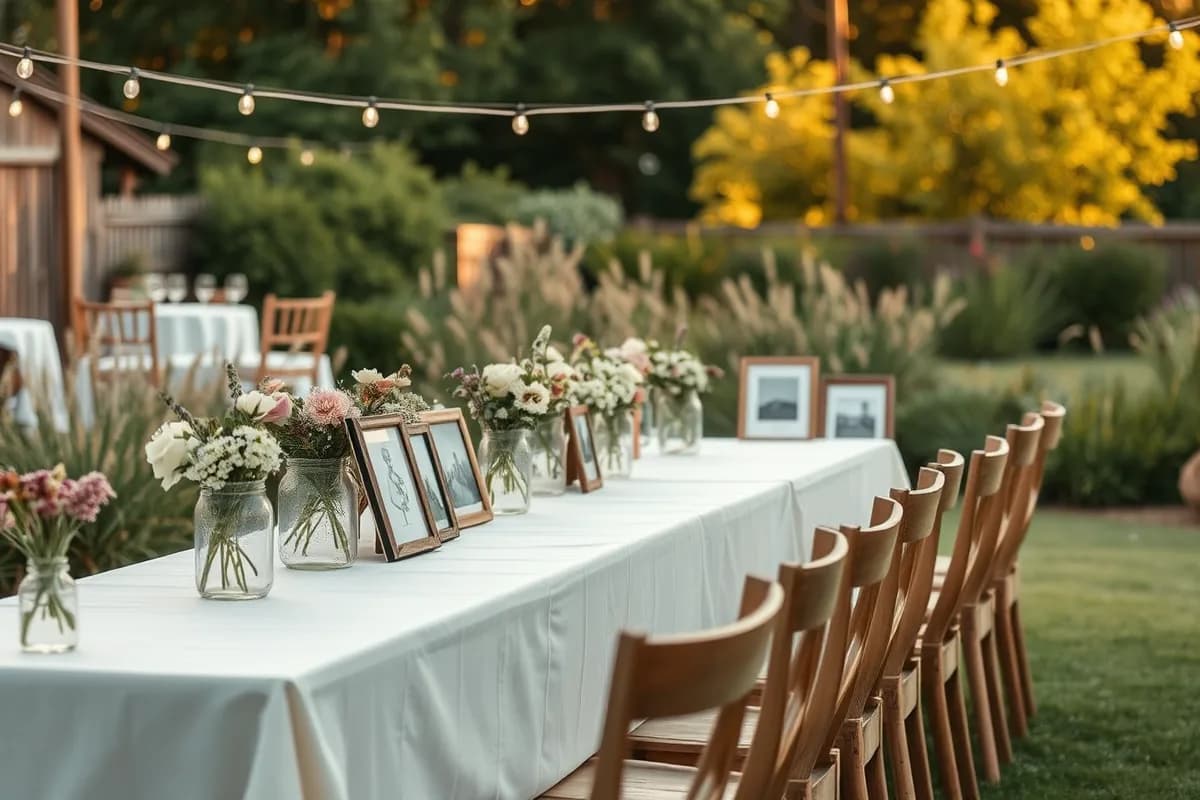
- Photo boards and memory tables get looked at properly here, more than at the service
- People leave in waves. Two to three hours is typical; close family often stays longer
Guests are not expected to stay the whole time. Forty-five minutes is a perfectly respectful visit if you are not close family — the same convention that governs funeral etiquette generally.
Telling people it is happening
This is the detail families forget, and it is the one that decides whether anybody turns up. Guests will not assume there is a meal, and many will quietly go home after the cemetery unless told otherwise.
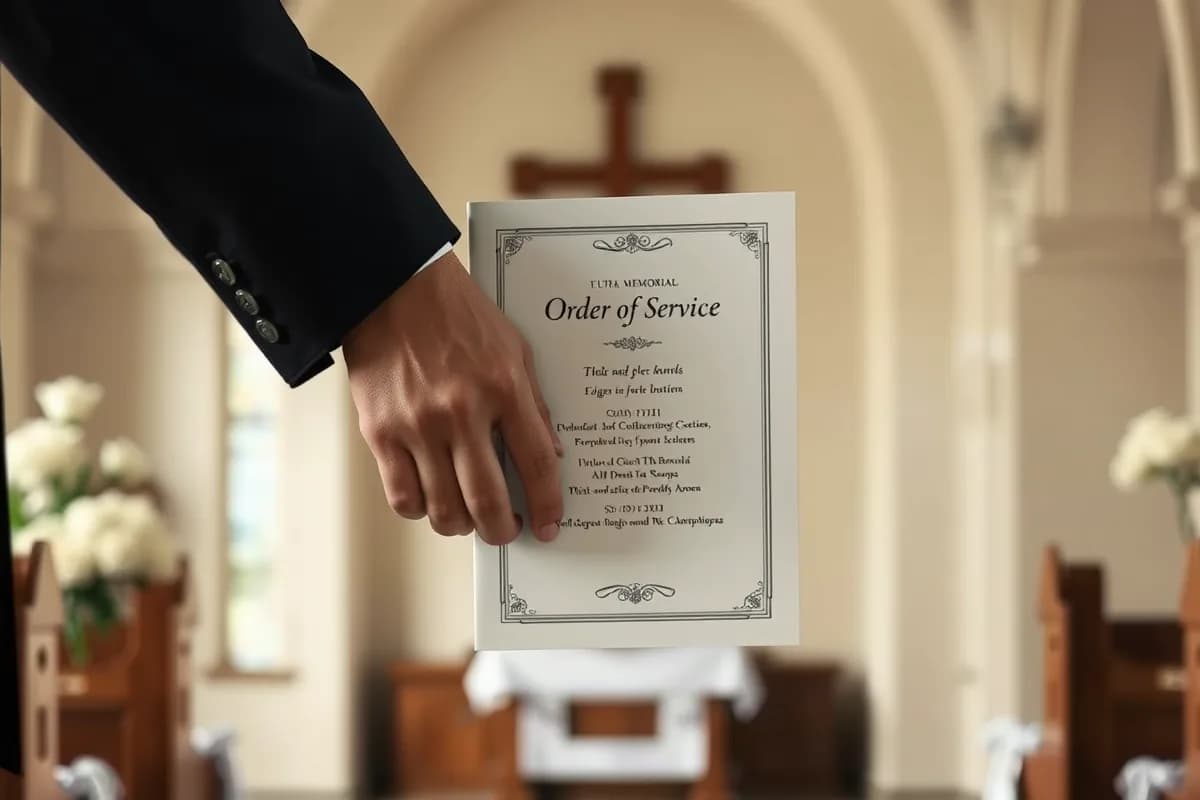
- Print it on the back panel of the program — the single most reliable method, since everyone is holding one
- Have the officiant announce it at the end of the service, with the address
- Include it in the obituary or death notice if the repast is open to all
- For a private repast, say so plainly: *"A private meal for family will follow."*
Sample back-panel wording sits alongside the rest of the layout in our sample funeral programs.
Common questions
What is a funeral repast?
The meal held after the burial or funeral service, where family and friends gather to eat and talk. It is informal, usually lasts two to three hours, and is held at a church hall, a family home, a restaurant or the funeral home. It is also called a repass, a funeral reception, or a mercy meal.
Is it repast or repass?
"Repast" is the standard spelling and comes from an Old French word for a meal. "Repass" is a widespread variant, particularly in African-American church communities where the tradition is especially strong. Both are understood and neither is worth correcting.
What is the gathering after a funeral called?
Most commonly a repast or a funeral reception. Catholic parishes often call it a mercy meal; in Britain and Ireland it is a funeral tea. All describe the same thing: the meal after the burial. The gathering held the evening before the funeral is a wake, which is a different event.
How long does a funeral repast last?
Two to three hours is typical. Guests arrive within about half an hour of the committal and leave in waves. If you are not immediate family, staying forty-five minutes is entirely respectful.
Who pays for the repast?
Usually the immediate family, but it is commonly shared. Churches often provide the hall and cook as a ministry, extended family bring dishes, and a potluck repast in a church hall is both traditional and nearly free.
How much food do you need for a repast?
Plan for roughly two-thirds of the number who attended the service. Not everyone continues on to the meal, and those who do tend to eat lightly. Food that holds at room temperature and serves itself is the practical choice.