The Tribute Journal
What Is a Wake? What to Expect and How to Behave
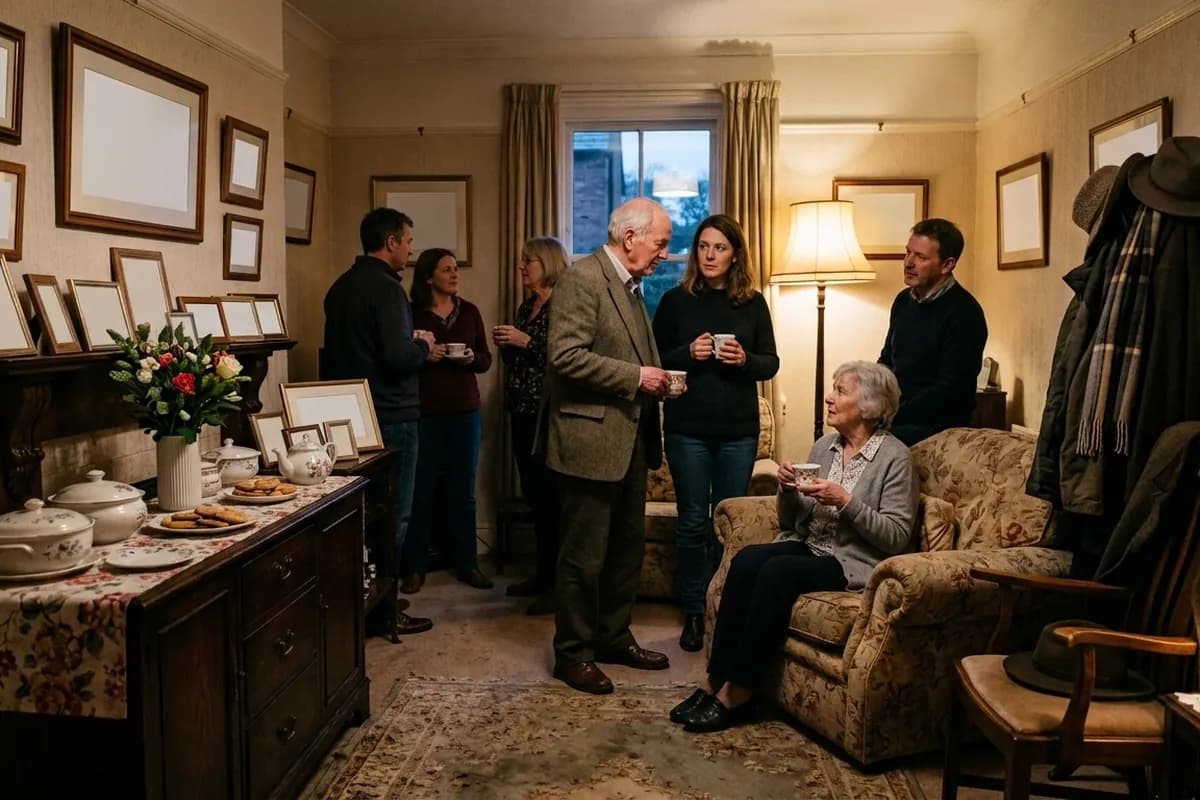
A wake is the gathering held before the funeral, where friends and family come to pay respects to the person who died and to support the people closest to them. It is social rather than ceremonial: there is no fixed order of service, people come and go, and conversation is expected.
If you have been invited to one and are not sure what you are walking into, the short version is this — arrive, greet the family, say something brief and kind, stay a while, and leave. That is the whole obligation.
Wake vs funeral vs viewing vs visitation
These four words get used interchangeably, including by funeral homes, which is most of the confusion.
- Wake — the gathering before the funeral. Historically at the family home, now often at a funeral home. Social, informal, no set structure
- Viewing — specifically an opportunity to see the body, in an open casket. May happen during a wake or as its own event
- Visitation — the funeral home's own term for scheduled hours when guests can come and pay respects. Functionally a wake held on their premises
- Funeral — the service itself. Structured, led by clergy or a celebrant, with readings, music and a eulogy
Because most American wakes now take place on funeral-home premises rather than at home, they fall under the same consumer protections as the rest of the arrangements: the funeral home must give the family an itemized price list, and visitation hours and facility fees appear on it as separate lines. The FTC sets out those rights in Shopping for Funeral Services.
So a wake is not a funeral, and attending one does not replace attending the other — though for many guests, going to just one is entirely normal and nobody counts. If the body is not present at all and there is no casket, you may be at a memorial service instead; our guide to funeral vs memorial service explains that distinction.
When and where a wake happens
- Timing — usually one to three days before the funeral, most often in the evening. Some families hold it the night before
- Length — typically two to four hours, with guests dropping in across that window rather than all arriving at once
- Place — a funeral home most commonly in the US; the family home in Irish, Italian and many other traditions; occasionally a church hall
- Numbers — anywhere from a dozen people to several hundred, and the family often does not know which until it happens
Because cremation has become the more common choice, wakes increasingly happen with an urn present rather than a casket, or with only photographs. The national cremation rate is tracked by both the National Funeral Directors Association and the Cremation Association of North America, and our comparison of cremation vs burial explains why the shift happened. It changes the feel of the room but not the purpose or the etiquette.
What actually happens at a wake
There is no program to follow, which is exactly what makes people nervous. In practice the shape is consistent:
- You arrive and are greeted, often by a member of the family near the entrance
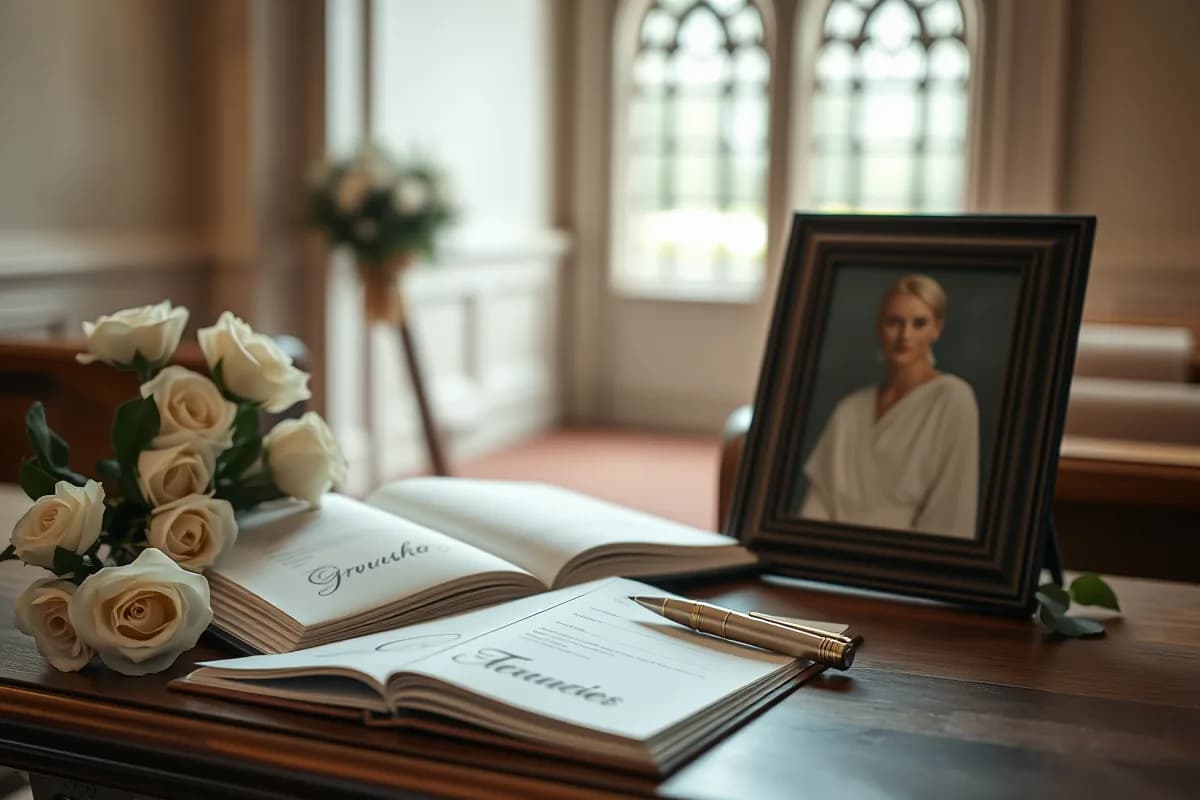
- You sign the guest book — do this, and write legibly; families genuinely read it later
- You approach the family to offer condolences, briefly
- If there is a casket or urn, you may pause there for a moment. Kneeling, crossing yourself, or simply standing quietly are all fine
- You then move into the room and talk to people. This is most of the evening
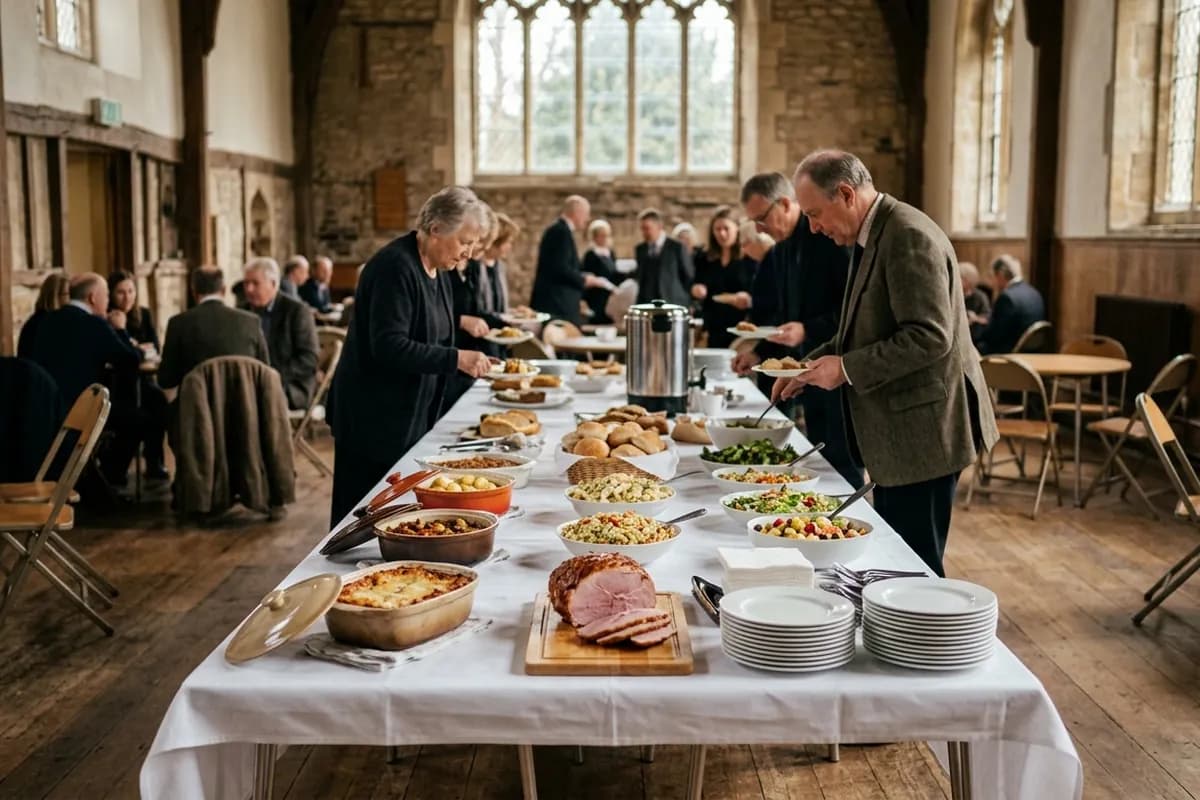
- There may be food, or tea, or nothing at all
- Sometimes there are short spontaneous tributes, prayers, or a rosary. Sometimes not
- You leave when it feels right, often after 30 to 60 minutes
The guest book matters more than people expect — it becomes the record of who came, and families use it for thank-you notes afterward. Ideas for setting one up, if you are the one hosting, are in our guide to funeral guest book ideas.
Why is it called a wake?
From watching, not from waking anyone. The older English sense of the word meant to keep watch or stay awake through the night, and the wake was literally that: family and neighbors sitting with the body in shifts until burial, so the person was never left alone.
That practice had a practical function before modern death certification — a period of watching gave certainty that death had occurred — and a spiritual one, in traditions that held the body should be accompanied. The all-night vigil has mostly gone; the name and the gathering stayed.
The Irish wake
Most of what English speakers picture when they hear "wake" comes from the Irish tradition, which is worth understanding on its own terms because it is noticeably less somber than a funeral home visitation.
- Held at the family home, with the body present, often for two nights
- The house stays open — neighbors come at all hours and are fed
- Storytelling about the person is the centre of it, and laughter is not only permitted but expected
- Drink is usually served
- Clocks were traditionally stopped and mirrors covered at the time of death
- Someone stays awake with the body through the night — the original watch
If you are attending an Irish or Irish-American wake and are surprised to hear people laughing, that is not disrespect. It is the point. Grief and celebration sitting in the same room is the tradition working as designed.
What to wear, bring and say
What to wear
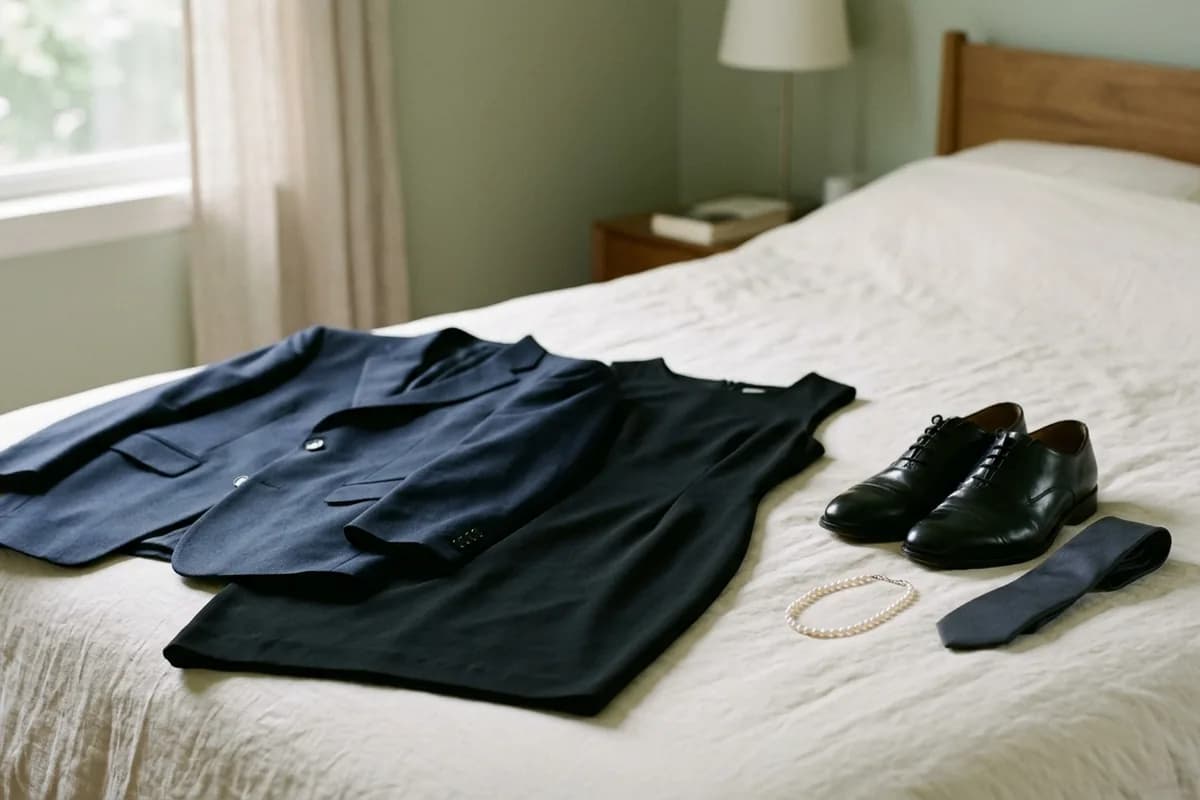
Dark and simple, but a step less formal than the funeral itself. Black is not required at a wake in the way it often is at a service, and navy, charcoal or grey are all correct. Our full guide covers every setting: what to wear to a funeral.
What to bring
- A sympathy card — the most useful thing you can carry, and it lets you say more than you will manage out loud
- Food, if you know the family well and it is at their home. Something that keeps and needs no dish returned
- Nothing at all is completely acceptable. Your presence is the thing
- Not flowers, generally — send those to the funeral or the house instead, so nobody has to carry them home from a wake
What to say
Short is better than eloquent. "I'm so sorry." "He was a good man." "I don't know what to say, but I wanted to be here." All of those work. Avoid explaining the death, comparing it to your own losses, or reaching for a silver lining. If you want a sentence ready before you walk in, our guides to what to say to someone who lost a loved one and sympathy card messages have wording you can borrow.
Broader conventions — when to arrive, where to sit, what to do with your phone — are covered in our guide to funeral etiquette.
Common questions
What is the difference between a wake and a funeral?
A wake is the informal gathering before the funeral, where guests come and go, talk, and offer condolences to the family. A funeral is the structured service, led by clergy or a celebrant, with readings, music and a eulogy. The wake is social; the funeral is ceremonial.
How long should you stay at a wake?
Thirty to sixty minutes is normal and entirely sufficient. Guests arrive across the whole window rather than all at once, so leaving after a while is expected, not rude. Stay longer only if you are close to the family or they clearly want company.
Do you have to view the body at a wake?
No. Viewing is always optional, even when the casket is open. You can walk past, sit at the back, or stay in the reception area. Nobody keeps track and no family member will be offended.
Is it disrespectful to laugh at a wake?
No — and in the Irish tradition it is close to expected. Wakes are where people tell stories about the person, and stories are often funny. Read the room, but do not assume solemnity is required throughout.
Can children go to a wake?
Yes, and many families want them there. Tell them beforehand what they will see, especially if the casket will be open, and give them permission to leave the room whenever they want.
What is the gathering after a funeral called?
Usually a reception, or a repast - our guide to the funeral repast covers where to hold it and what to serve. It happens after the service rather than before it, and is generally lighter in tone than a wake — food, tea or a meal, and less formality. A wake comes before the funeral; a repast comes after.