The Tribute Journal
Memorial Service Ideas: Planning a Farewell That Feels Like Them
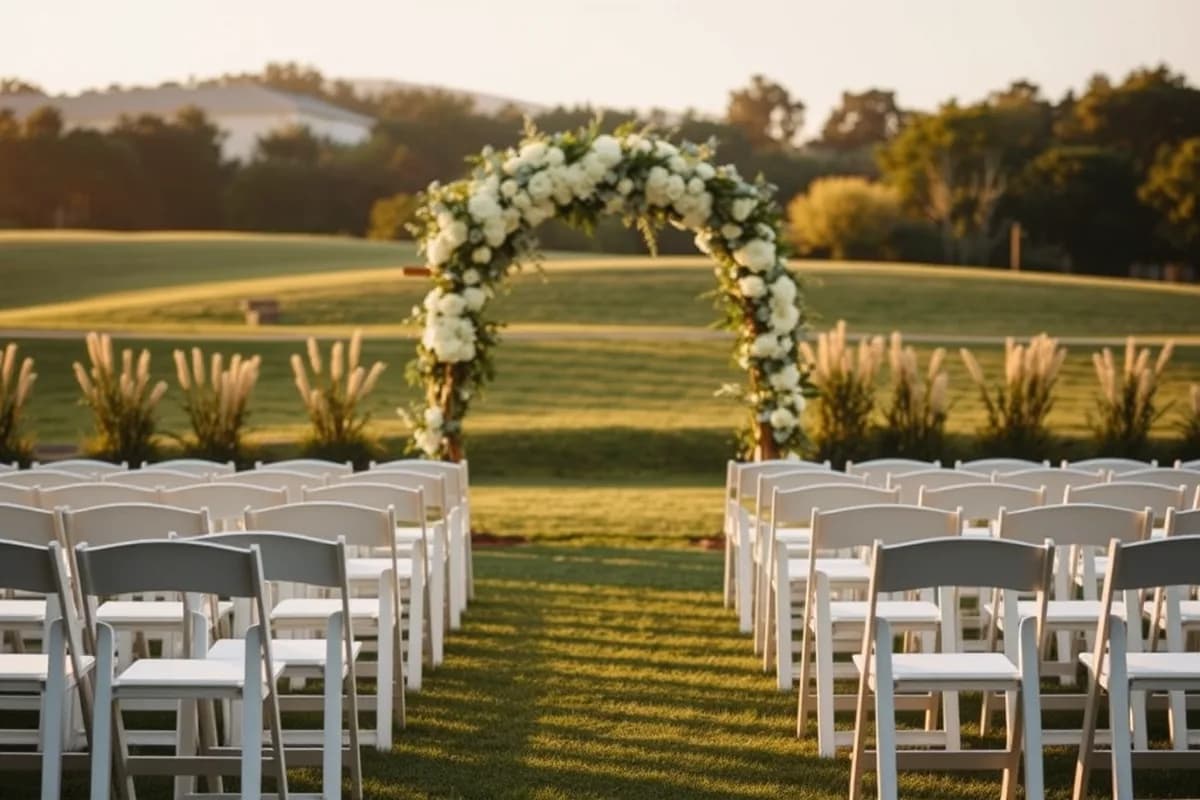
A memorial service differs from a funeral in one liberating way: the body is not present, so the timing, the venue and the shape of the gathering are entirely yours. It can happen three weeks after a private cremation or three months later when far-flung family can gather. That freedom is exactly why so many families feel lost planning one — so here is a map. If you are still working out which kind of gathering you are holding, start with funeral vs memorial service.
First, choose the feeling
Before venues and caterers, decide the emotional register. Reflective and reverent? Warm and storytelling? Openly joyful? Every later decision — music, dress code, readings, food — flows from this one choice, and it should flow from the person. A quiet man's service can be quiet; a woman who filled rooms deserves a full room. If you lean joyful, our celebration of life guide is written for exactly that.
Venue ideas
- A church, chapel or funeral home — familiar, handled, weather-proof.
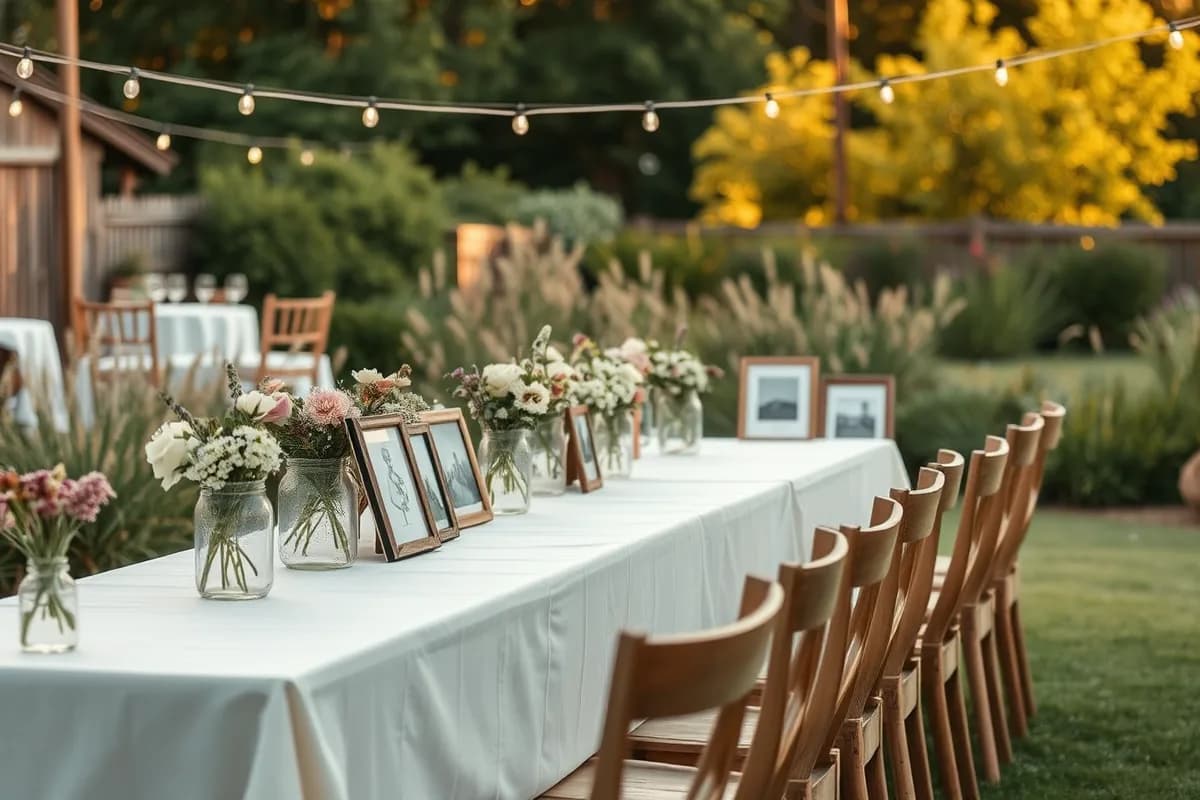
- The family garden or a favorite park — personal and free, with a rain plan.
- A community hall, library room or clubhouse — practical for larger groups.
- A restaurant's private room — service and food solved in one booking.
- The water's edge — meaningful for sailors, swimmers and fishermen, especially with a scattering to follow.
- Online alongside any of the above — a simple stream lets distant family attend.
A structure that always works
- Gathering music as guests arrive — quiet instrumental for fifteen minutes.
- Welcome from the officiant or a composed family member — two minutes, warm.
- A reading — scripture, a poem, or a favorite passage.
- The eulogy — one main tribute, ten minutes at most.
- Open memories — two or three prepared speakers, then the floor, gently time-boxed.
- Music or slideshow — the emotional center of the service.
- Closing words and thanks — where the family's gratitude is spoken aloud.
- Reception — food, stories, and the healing that happens standing up.
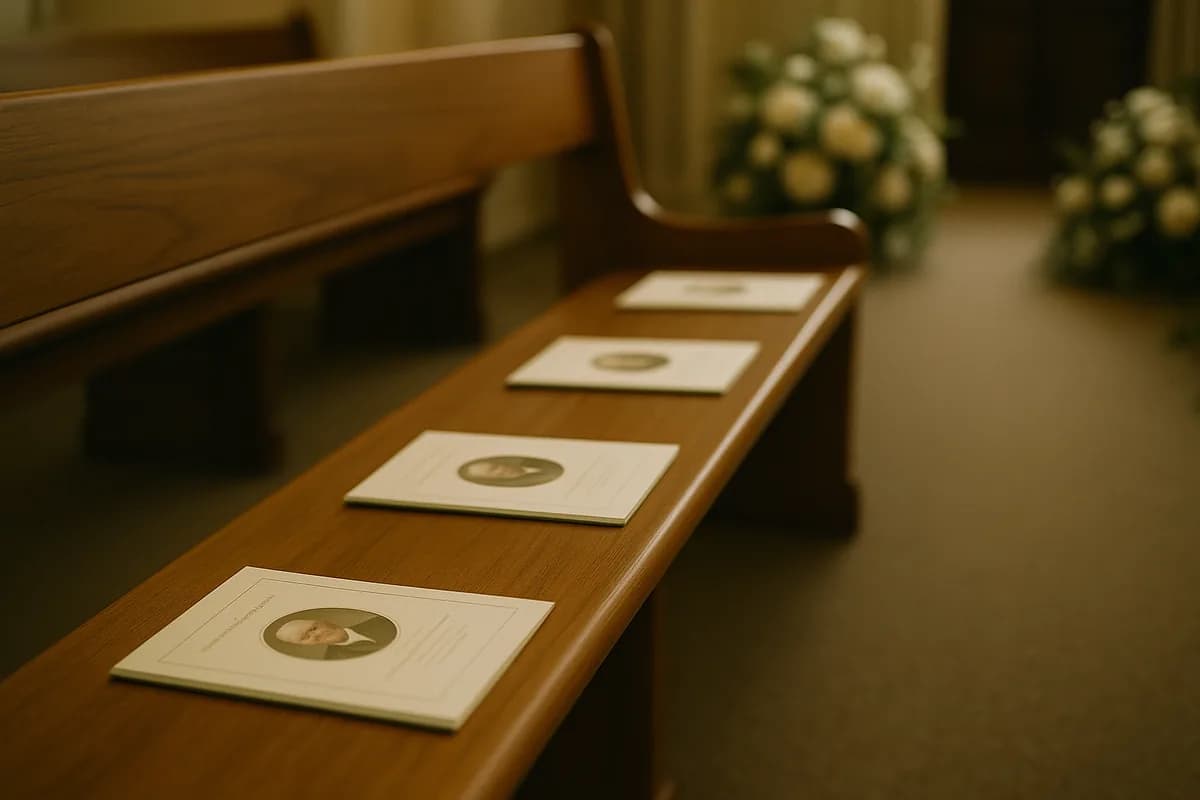
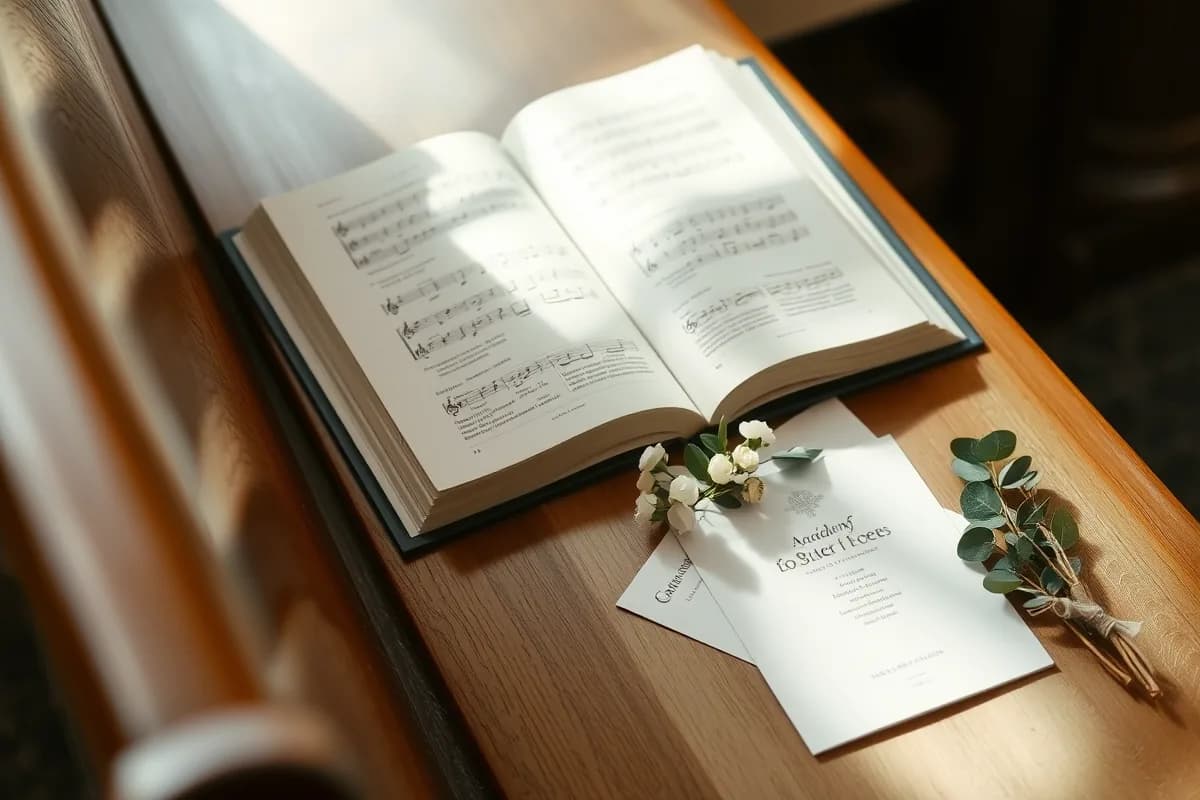
That skeleton — with names and times attached — is exactly what belongs in the printed program. Our order of service examples show several variations filled in.
Personal touches that people remember
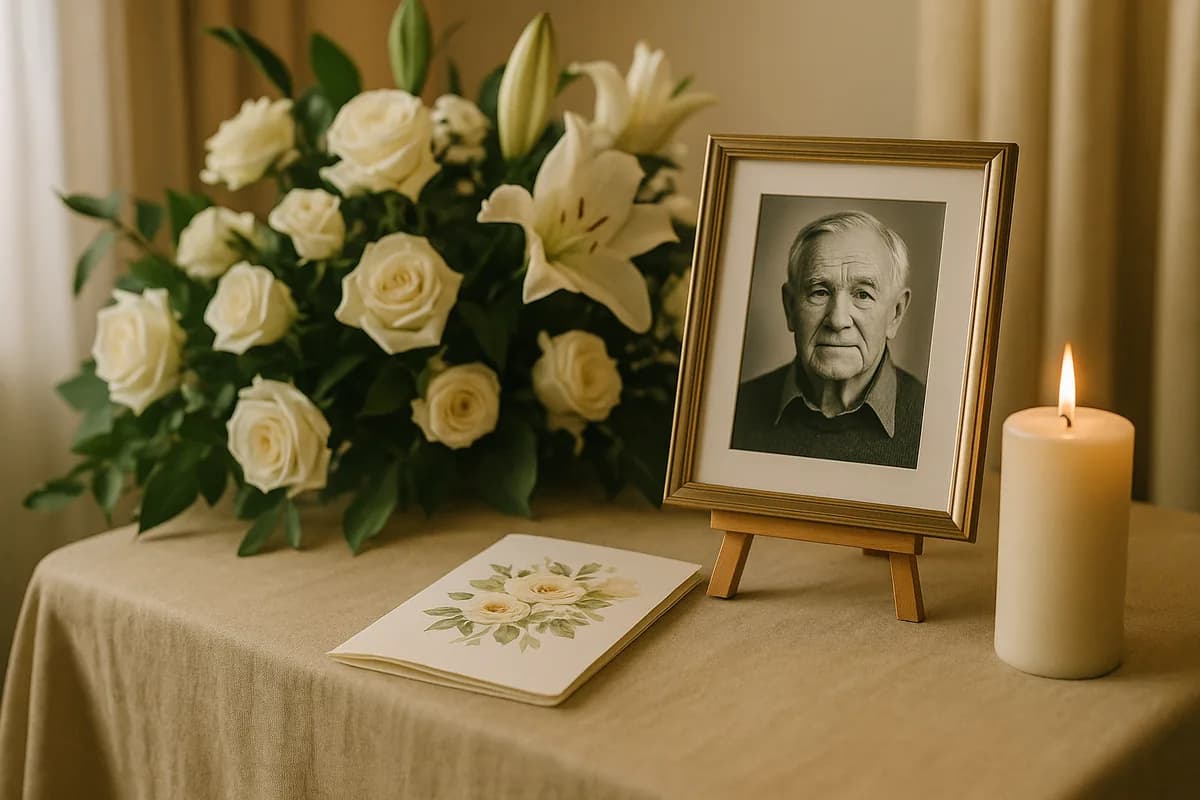
- A memory table — their hat, their tools, their handwriting, their photographs.
- A photo timeline strung across one wall, childhood to last summer.
- Their music playing as guests arrive — not funeral music, *their* music. (Our funeral songs list has an uplifting section.)
- A signature dish at the reception, cooked from their own recipe.
- Seeds or cuttings from their garden as a keepsake for every guest.
- A guest book with prompts — or one of the alternatives that gather stories, not just names.
- A tribute video — three to six minutes of photographs set to music, played once, together. (We make these, from $99.)
- An empty chair with their photograph at family events to come — announced at the service as a promise to keep telling their stories.
A simple planning order
- Set the date and venue — everything else hangs on these.
- Choose the officiant or host, and the two or three speakers.
- Choose readings and music; confirm anything sung with the venue.
- Gather photographs for the display and any slideshow — start early, it takes longest.
- Write the order of service and have the program designed once it is settled.
- Arrange food, and assign one non-family greeter and one person to mind the guest book.
- The day before: print count check, sound check, a folder with every reading printed in large type.
How long after death is a memorial service held?
Anywhere from two weeks to several months. Because the body is not present, families choose a date when everyone can travel — there is no required timeline.
How long should a memorial service last?
The structured portion usually runs 30–60 minutes, followed by a one- to two-hour reception. Shorter is almost always better than longer.
Who officiates a memorial service?
Anyone the family chooses: clergy, a celebrant, a funeral director, or a steady-voiced friend or family member. A memorial service has no required officiant.
What is the difference between a memorial service and a celebration of life?
They overlap heavily. A memorial service tends to keep a service-like structure without the body present; a celebration of life leans festive and informal. Many gatherings are both.