The Tribute Journal
Funeral Memory Table Ideas: 20 Ways to Set One Up
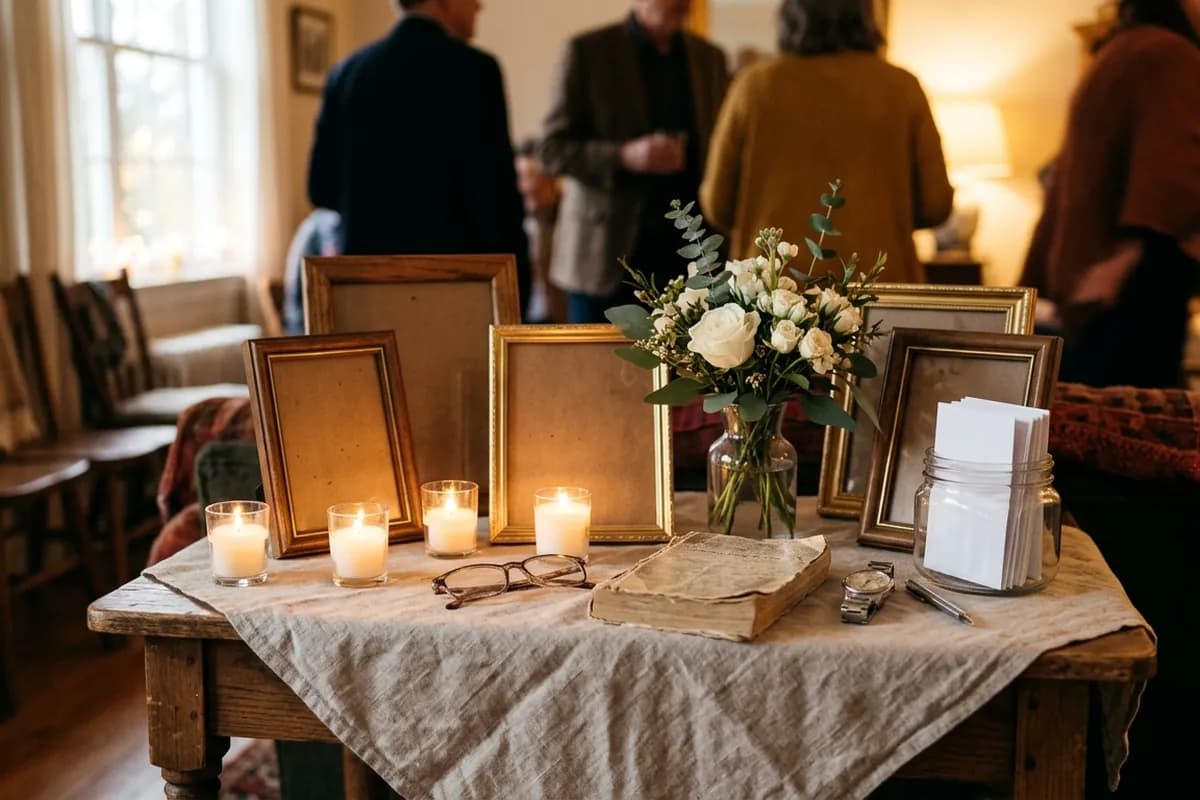
A memory table is not measured by how much is on it. It works when someone walks past, stops, and says *that was so them*. One pair of muddy walking boots can do that better than forty photographs can.
Here are twenty things to put on one, how to arrange them, and the interactive ideas that get guests talking to each other instead of standing in silence.
The objects
Start with the things only your family would think of. Those are what people remember.
- 1. Photographs across the decades — not only the recent ones. A picture of them at twenty surprises everyone
- 2. The thing they always wore — a watch, a scarf, reading glasses, a wedding ring on a stand
- 3. Tools of their trade — a stethoscope, a trowel, a set of keys, a well-used cookbook
- 4. Hobby objects — fishing reel, knitting, a golf ball, sheet music, a deck of cards
- 5. A favorite book, open at a marked page
- 6. Letters or handwriting — a recipe card in their hand is more affecting than anything typed
- 7. Medals, badges or a folded flag for a veteran
- 8. Something from their garden — cuttings, a potted plant, a jar of their own honey
- 9. A favorite mug or glass, left as if just set down
- 10. Travel mementoes — a ticket stub, a shell, a small souvenir from the trip they never stopped mentioning
Interactive ideas
These are the ones that change the atmosphere of a room, because they give guests something to do with their hands.
- 11. Memory jar — blank cards and pens, and an invitation to write one memory. The family reads them weeks later, which is exactly when they need to
- 12. Memory tree — small tags tied to bare branches in a vase. Doubles as decoration as it fills
- 13. Photo you can take — a basket of small printed copies of one favorite photograph, for guests to keep
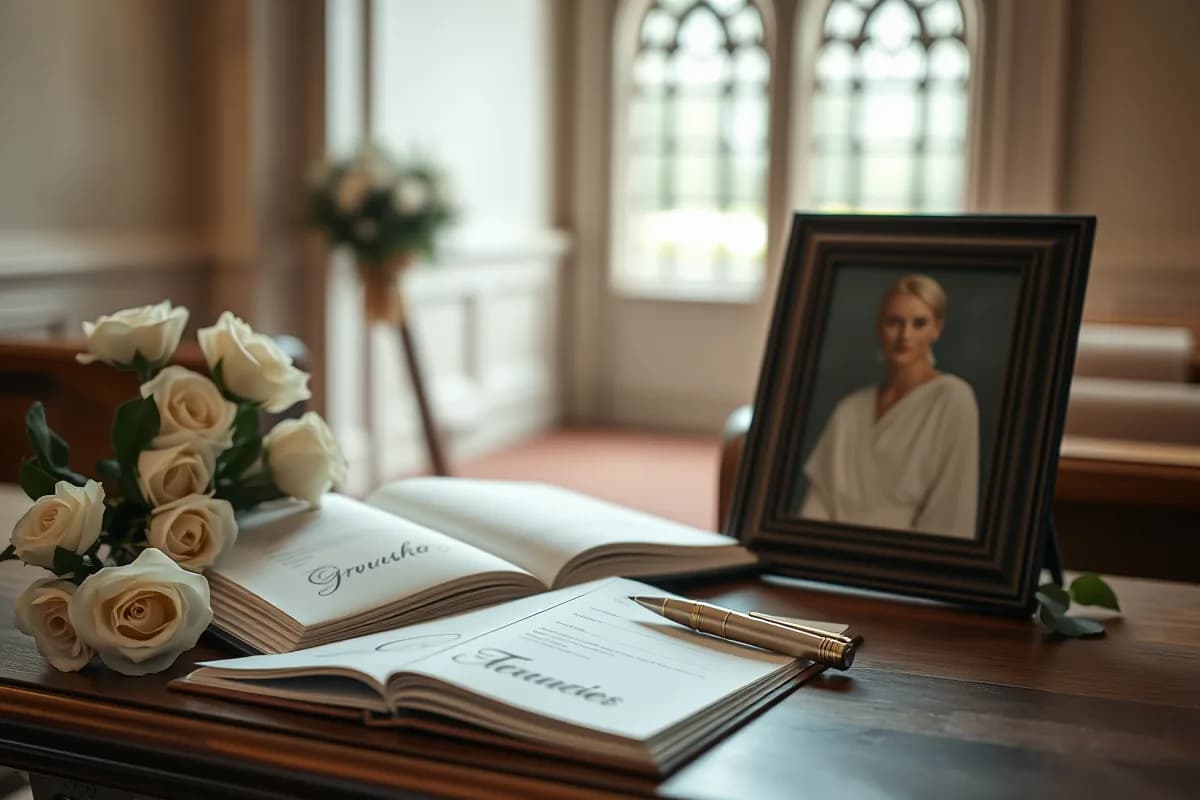
- 14. Guest book beside the table, not at the door, so people write after they have seen the display rather than before
- 15. Candle to light — a tray of tealights guests can light individually. Check the venue allows open flame first
- 16. Recipe cards — if they cooked, print their recipe and let guests take one
The guest book in particular deserves its own thought — our guide to funeral guest book ideas covers the alternatives families actually keep.
The setting
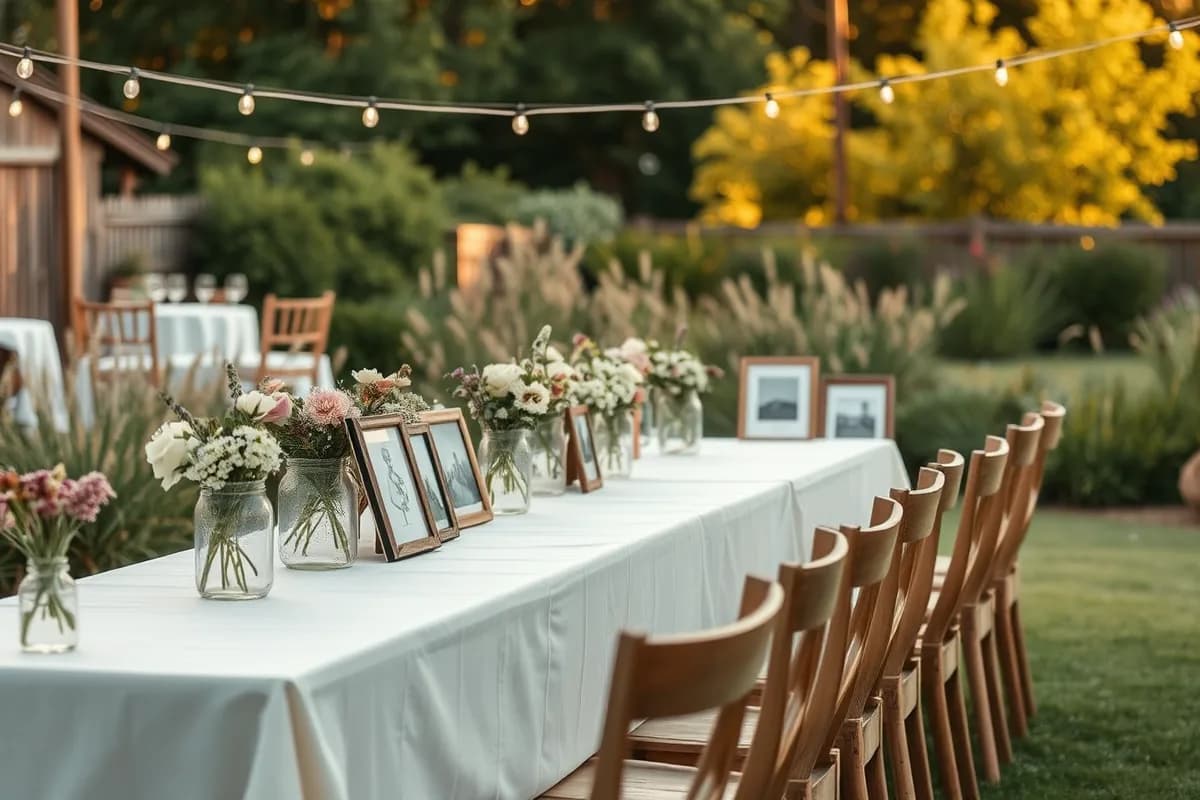
- 17. Vary the heights — books or boxes under the cloth create levels. A flat table always looks like a jumble sale
- 18. Odd numbers, grouped — cluster objects in threes rather than spacing everything evenly
- 19. One light source — a small lamp or candles rather than overhead lighting, which flattens everything
- 20. Leave empty space — the most common mistake is filling every inch. Gaps are what make the objects read as chosen
Where to put it
Placement decides whether anyone actually looks at it.
- Not at the entrance. Guests arriving are focused on finding the family and a seat; they walk straight past
- Where people wait — near the refreshments, or where the queue forms. That is where they have time to look
- Reachable from both sides if the room is busy, so it does not create a bottleneck
- Near a wall socket if there is a slideshow running on a screen or tablet alongside it
- Away from the doorway draught if there are candles or anything light enough to blow over
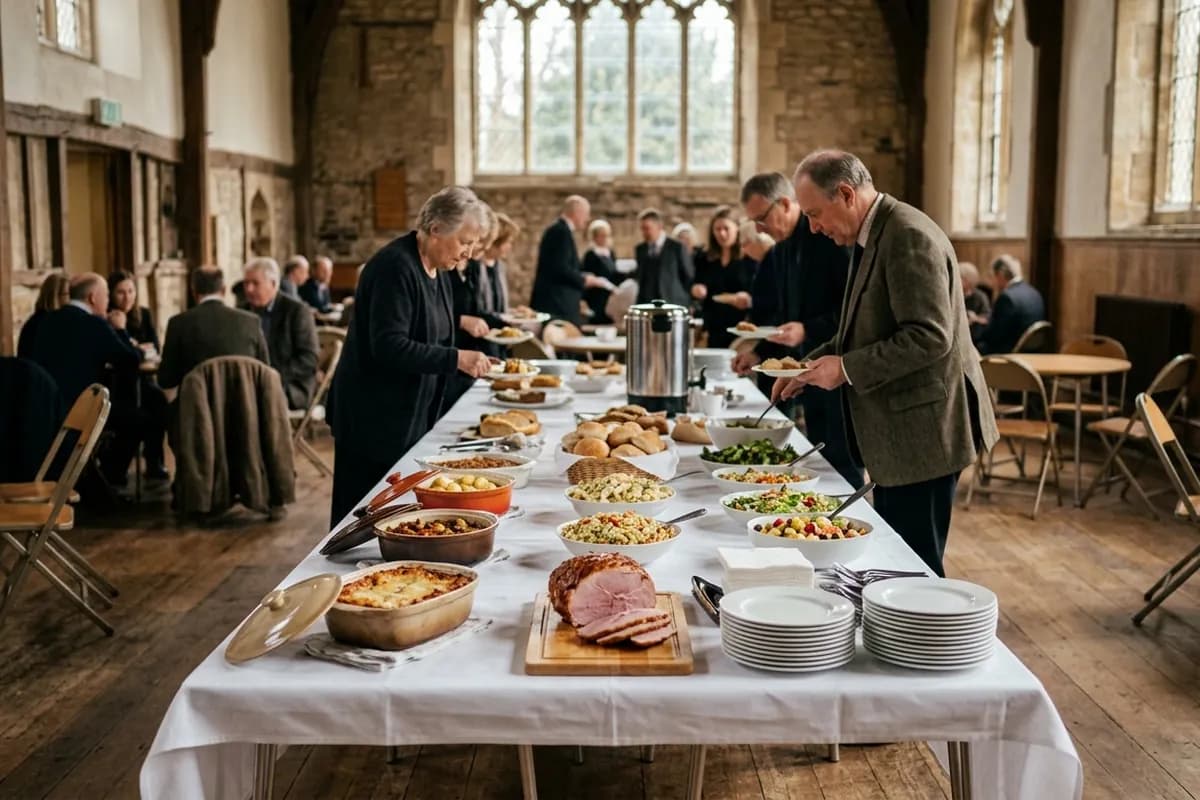
If the gathering is a repast in a church hall, the memory table usually sits near the food, since that is where everyone ends up — see our guide to the funeral repast. A looping photo slideshow beside it works well too; ours on memorial slideshows covers the timing and song choices.
A checklist for the day
- Bring the table cloth — venues rarely have one that suits
- Pack objects in one labeled box and give one person the job of setting up and packing down
- Photograph the finished table before guests arrive. Families are always glad they did and almost never remember at the time
- Battery candles if the venue forbids flame — and if the funeral home charges for display stands or easels, that fee must appear as its own line on the itemized price list they are required to give you (FTC Funeral Rule) — most halls and some funeral homes do
- Small easels or stands for frames; propped frames fall over all afternoon
- Decide in advance who takes what home, so nothing goes missing at the end of a long day
Personalized displays like this are part of the broader shift toward tailored services that the National Funeral Directors Association has tracked for years. For the wider shape of the gathering around the table, see our memorial service ideas and celebration of life ideas.
Common questions
What do you put on a funeral memory table?
Photographs spanning different decades, objects they used every day (glasses, a watch, a favorite mug), things from their hobbies or work, handwriting such as a recipe card, and something interactive like a memory jar or a candle to light. The specific and personal items work far better than generic decoration.
How do you arrange a memory table so it does not look cluttered?
Vary the heights using books or boxes under the cloth, group objects in odd numbers rather than spacing them evenly, use one soft light source instead of overhead lighting, and deliberately leave empty space. Gaps are what make the objects look chosen rather than piled.
Where should the memory table go?
Not at the entrance — arriving guests walk straight past it. Put it where people wait, usually near the refreshments or where the queue forms, so they have time to stop and look. Keep it reachable from both sides if the room is busy.
What is a memory jar?
A jar placed on the table with blank cards and pens, inviting guests to write down one memory of the person. The family reads them later, often weeks after the funeral when the visitors have gone and the support has thinned out, which is when they matter most.
Can you have a memory table at a cremation or memorial service?
Yes, and it is especially common at memorial services, where there is no casket and the table becomes the focal point of the room. With cremation now the more common choice in the US — the national rate is tracked by the Cremation Association of North America — this is increasingly the norm. An urn is often placed on or beside it, along with the framed portrait.