The Tribute Journal
Scattering Ashes: Where You Can, the Law, and What to Say
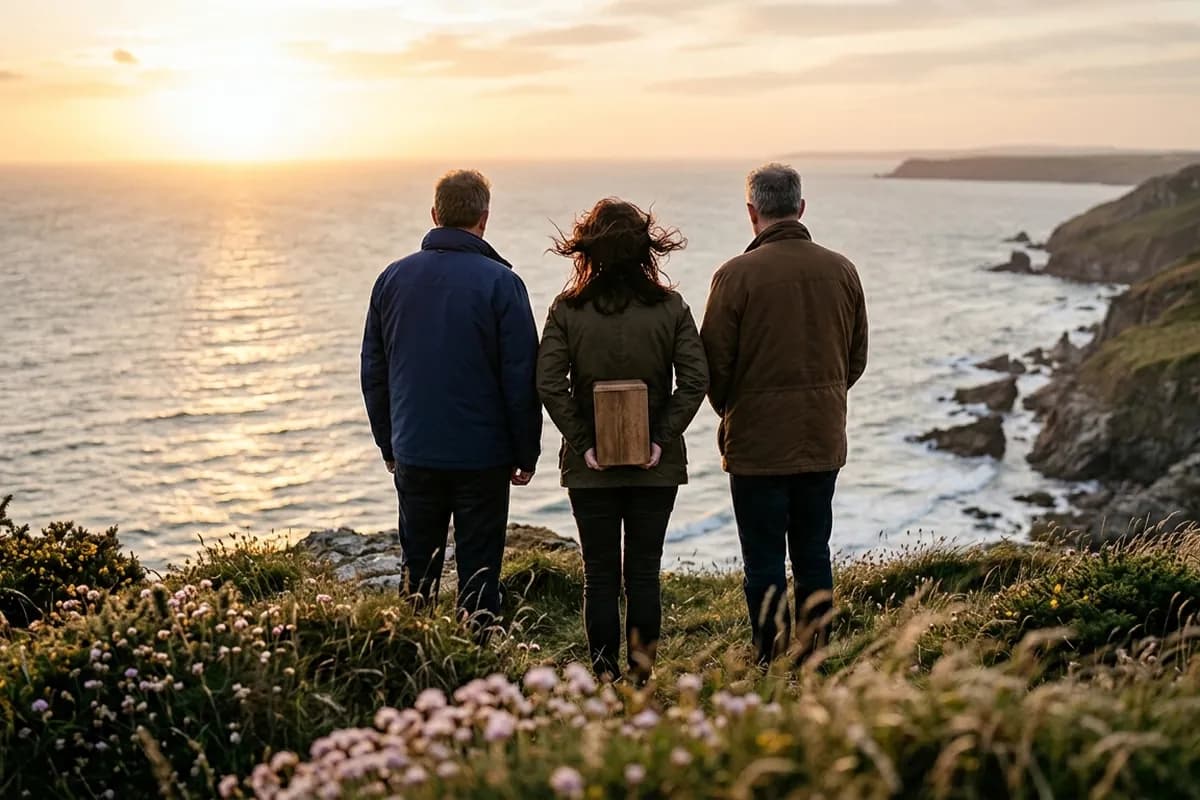
In the United States you can scatter ashes on your own land freely, on public land with permission, and at sea under federal rules that require you to go at least three nautical miles out. There is no national law against scattering itself — the restrictions are about *where*, and they are easier to satisfy than most families expect.
What follows is the legal position, the practical methods, and — because this is the part people freeze on — words you can actually say when the moment comes. Scattering is a common question now simply because cremation is: the Cremation Association of North America tracks the national rate, which overtook burial in the mid‐2010s.
Where you can legally scatter ashes
At sea
Federal rules are specific and genuinely enforced. Under the Marine Protection, Research and Sanctuaries Act, cremated remains may be scattered in the ocean at least three nautical miles from shore, and the EPA must be notified within 30 days. Flowers and wreaths must be readily decomposable. Full guidance is on the EPA's burial at sea page.
Note that this covers the ocean. Scattering in lakes, rivers and other inland waters is governed by state law instead, and varies — some states require permission from the body managing the water.
On private land
Your own property: no permission needed anywhere in the US. Someone else's property: you need the owner's permission, and you should get it before the day rather than after. Worth thinking about too — if the land is later sold, the family loses access to the spot.
In national parks
Permitted in most national parks, but a permit is required and conditions apply — typically away from trails, roads, waterways and developed areas, with no marker left behind. Rules are set park by park, so contact that park directly; the National Park Service planning pages are the place to start.
Other public places
- State parks and beaches — varies by state; many allow it with a permit
- Sports stadiums, theme parks and private venues — almost always prohibited, whatever you may have heard
- Cemeteries — most have a scattering garden and will welcome it, usually for a fee
- From an aircraft — legal, and specialist services exist; the remains must leave the container, and nothing else may be dropped
Five ways to scatter
- Casting — the classic. Pour steadily downwind, low to the ground or water. Always check the wind first, and stand upwind together
- Trenching — dig a shallow trench or hole, pour in, and let the tide or the family fill it back. Gentler and far less exposed to wind
- Raking — scatter over loose soil and rake in. Common in cemetery scattering gardens
- Water ceremony — use a water-soluble urn that floats briefly and then sinks. Removes the wind problem entirely and gives everyone something to watch
- Dividing — separate the remains among family members in small keepsake urns, so several people can scatter in different places that mattered. Increasingly common when relatives are spread out
Whichever you choose, decide in advance who holds the urn and who pours. That one unassigned job causes more awkwardness at the graveside than anything else.
What to say when scattering ashes
There is no required form of words, and no one is judging the delivery. Short is better than grand. Here are lines that work, to use as they are or to adapt.
Short and non-religious
We bring you back to the place you loved most. Rest here. Thank you for everything.
- "We give you back to the earth, and we keep you with us."
- "This was your favorite place. It felt right to bring you home to it."
- "Go gently. We will be all right, and we will miss you every day."
- "Not goodbye — just goodbye for now."
At sea
We commit these ashes to the deep, to the water you loved, until the sea gives up her dead. Fair winds, and following seas.
Religious
- "Ashes to ashes, dust to dust; in sure and certain hope of the resurrection to eternal life."
- "We commit her body to the elements, and her soul to God who gave it."
- "The Lord bless you and keep you; the Lord make his face shine upon you, and give you peace."
Longer readings, prayers and verses for the moment are collected in our funeral prayers and in loving memory quotes.
Shaping it as a small ceremony
A scattering does not need structure, but a little makes it easier on everyone — particularly if children are present or the family is not religious.
- Gather and wait until everyone is settled. Do not rush the first minute
- One person says why this place was chosen
- A short reading, poem, or piece of music
- The scattering itself
- A silence — let it run longer than feels comfortable
- Flowers or petals cast afterward
- Something to eat and drink nearby, even just a flask
Many families print a small card with the reading and the person's name and dates, so guests have something to hold and keep. If the scattering is part of a larger gathering, our memorial service ideas cover the rest of the day.
Before you decide
Two things worth thinking through, because both are hard to undo.
- Scattering is permanent. There is no changing your mind and no place to visit afterward. Families who later want somewhere to go sometimes regret it — retaining a small portion in a keepsake urn, or interring part of the remains, gives you both
- Agree it as a family first. Scattering carried out by one relative without the others' agreement causes lasting rifts. If opinions differ, dividing the remains resolves it more often than argument does
If you are still weighing cremation itself, our comparison of cremation vs burial covers the cost difference and what each faith teaches.
Common questions
Is scattering ashes illegal?
No. Scattering itself is legal throughout the United States. The rules concern location: your own land needs no permission, someone else's needs the owner's, national parks require a permit, and ocean scattering must happen at least three nautical miles from shore with the EPA notified within 30 days.
What do you say when scattering ashes?
Something short and plain works best. "We bring you back to the place you loved most — rest here, and thank you for everything" is enough. At sea, "we commit these ashes to the deep" is traditional. There is no required wording and no one is assessing the delivery.
How far out to sea do you have to scatter ashes?
At least three nautical miles from shore under federal rules, and the EPA must be notified within 30 days. Any flowers or wreaths released must be readily decomposable. Inland waters such as lakes and rivers fall under state law instead.
Can you scatter ashes in a national park?
In most parks yes, but a permit is required and conditions apply — usually away from trails, roads, water and developed areas, with nothing left behind to mark the spot. Rules are set individually by each park, so contact that park before making plans.
How much ash is there from a cremation?
Roughly four to six pounds for an adult. The remains are coarse, pale and heavier than people expect — closer to sand than to fireplace ash — so they pour rather than drift. Check the wind and pour low and steadily.
Can you split ashes between family members?
Yes, and it is increasingly common. Remains can be divided among relatives in small keepsake urns so several people can scatter in different meaningful places, or so one portion can be kept while the rest is scattered. It often resolves disagreements about what to do.